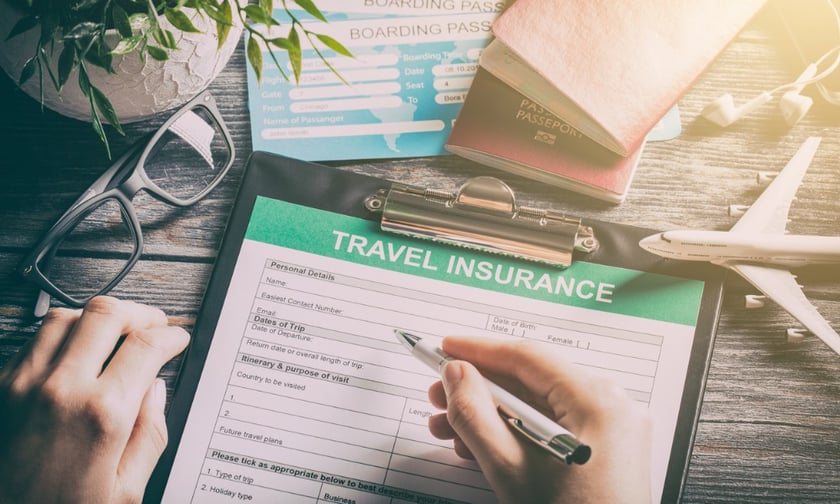
Air Vanuatu liquidation exposes insurance coverage gaps | Insurance Business Australia
Thousands of travelers left stranded, facing financial losses
Travel
By Roxanne Libatique
Air Vanuatu’s unexpected decision to enter voluntary liquidation has left thousands of travelers stranded and facing significant financial losses due to widespread flight cancellations.
A spokesperson from the Department of Foreign Affairs and Trade (DFAT) has advised Australians to reach out to their travel agents or travel insurance providers. Consumer experts, however, warn that only a few travel insurance policies cover such insolvency events.
Australian travel insurers that cover airline insolvency
Natalie Ball, director of Compare Travel Insurance, indicated that travelers impacted by Air Vanuatu’s liquidation might be able to claim expenses through their travel insurance.
“In the event that an airline has entered voluntary administration, only a handful of travel insurers provide reimbursement for lost trip costs. This benefit usually only applies to comprehensive policies and claims would be assessed on an individual basis,” she said.
She highlighted that not all travel insurers provide coverage for insolvency or financial collapse, stressing that customers need an active policy before the event to be eligible for claims.
Compare Travel Insurance highlighted insurers that cover airline insolvency:
Cover-More offers up to $10,000 for rearrangement or cancellation due to insolvency of a travel services provider (applicable to comprehensive policies only);
Go Insurance providers up to $1,500 for trip cancellation or amendment due to financial default of a travel service provider (for Go Plus policies only);
Travel Insurance covers up to $5,000 for the insolvency of a booked travel carrier (applicable to Deluxe policies only); and
World2Cover assists up to $3,000 per adult if the travel services provider, excluding agents and operators, suffers financial default.
How to mitigate travel insolvency risks
Ball advised travelers to thoroughly research travel insurance providers to avoid potential risks.
“Make sure you know what you’re covered for and ensure you’re up to date on what you’re entitled to as a consumer. Always choose reputable travel providers and consider booking your trip through a travel agent – they may be able to issue you with a refund under these circumstances,” she said.
Using a credit card for travel bookings might also offer additional protection, according to Ball.
“If you aren’t covered by insurance, you could be entitled to a ‘chargeback’ through your credit card company if you pay for a service and don’t end up receiving the product or service. Keep in mind that you would have to have paid for most of your trip via your credit card to be eligible,” she said.
She further emphasized that travel insurance generally excludes coverage for the insolvency of travel agents but can be crucial for airline insolvency.
“Travel insurance generally excludes coverage for the collapse of a travel agent. However, in the case of airline insolvency, travel insurance can be a life saver. “We highly recommend securing travel insurance before any trip as a preventive measure,” she said.
The IA has warned insurers of the inherent risks related to premium financing as this is particularly sensitive to changes in interest rates. The surge in interest rates in the past two years has brought severe volatility to the market which has impacted both policyholders and the insurance market.
Mr Marty Lui, the IA’s head of Long Term Business (Acting), highlighted the risks involved in premium financing:
during periods of low interest rates, policyholders are able to use premium financing to benefit from the spread between their policy returns and bank loans and also amplify their returns through leveraging; however, this magnifies risks and potential losses;
current high interest rates have already increased the cost of borrowing, and at the same time decreased policy returns as the majority of products purchased through premium financing are now participating products, which offer returns which are not guaranteed and are subject to the investment performance of the insurers and also have longer break-even periods, further aggravating the risks involved in premium financing.
In view of these risks, the IA and the Hong Kong Monetary Authority (HKMA) jointly issued guidance to the industry in 2022 to clarify the supervisory requirements for premium financing. These requirements, which take effect in 2023, are targeted at insurers and insurance intermediaries and focus on enhancing disclosure and improving affordability assessment to protect policy holder interests.
In 2022, the IA received 28 complaints about premium financing, and that figure rose to 50 in 2023. Concerns were raised over the lack of risk disclosure by intermediaries during the selling process and misrepresentation of policy terms and loan rates.
In 2023, premium financing activities will slow down substantially; this business declined from 43% of the total market in 2022 to 21% in 2023 (including a multi-year record low of 9% in Q4 of 2023). This may indicate that amid rate increases the public has become relatively conservative towards premium financing.
The IA and the HKMA have joined forces for another round of inspections related to premium financing to examine compliance with the new requirements and assess market trends. They will share their observations from these inspections with the industry in due course and in the interim, and to enhance policyholder protection, have issued a reminder about the cautious use of premium financing.
The best COVID travel insurance is Seven Corners’ Trip Protection Basic, according to our analysis of travel insurance plan rates and coverage options.
Editor’s note: This article contains updated information from a previously published stories.
Best COVID travel insurance of 2024
Why trust our travel insurance experts
Our team of experts evaluates hundreds of insurance products and analyzes thousands of data points to help you find the best product for your situation. We use a data-driven methodology to determine each rating. Advertisers do not influence our editorial content. You can read more about our methodology below.
851 coverage details evaluated.
161 rates reviewed.
5 levels of fact-checking.
Top-rated travel insurance for COVID-19
Compare the best COVID travel insurance plans
Our insurance experts reviewed 851 coverage details and 161 rates to find the best COVID travel insurance plans. For this rating, we only scored travel insurance plans that cover COVID.
The benefits we scored out of a possible 100 points include:
Cost: 70 points. We scored the average cost for each COVID travel insurance policy with “cancel for any reason” (CFAR) coverage for a variety of international trips and traveler profiles.
Emergency medical expenses: 10 points. We scored travel medical insurance by the coverage amount available. Travel insurance policies with travel medical expense benefits of $250,000 or more per person were given the highest score of 10 points.
Medical evacuation: 10 points. We scored each plan’s emergency medical evacuation coverage by coverage amount. Travel insurance policies with medical evacuation expense benefits of $500,000 or more per person were given the highest score of 10 points.
“Interruption for any reason” upgrade: 10 points. We gave travel insurance plans with the option of “interruption for any reason” coverage 10 points. This coverage allows you to end your trip early for any reason, including reasons not listed in your policy, and get reimbursed for a certain percentage of your prepaid expenses.
How to buy COVID-19 travel insurance
“Look for travel insurance that covers trip cancellation, trip interruption, emergency medical and emergency medical transportation,” said Daniel Durazo, director of external communications at Allianz Partners USA. A policy that provides epidemic-related coverage may reimburse you for costs associated with a canceled trip, travel delays, mandatory quarantines and being denied boarding due to suspected illness.
Plans that offer emergency medical coverage usually provide medical coverage for treating COVID-19, but you’ll want to read the policy to be sure.
Most travelers are surprised to learn about the 15-day review period that comes with many travel insurance policies, Durazo said. “Consumers should take the time to read their policy and call their provider with questions. If they don’t feel that their policy meets their needs, they can exchange it for a new product or cancel it for a full refund.”
Average cost of COVID travel insurance
The average cost of our top-scoring COVID travel insurance plans is $415. By adding optional “cancel for any reason” (CFAR) coverage, the average cost of COVID travel insurance rises to $615, an increase of 48%.
CFAR coverage gives you the flexibility to cancel your travel plans for any reason, as long as you do so at least two days before your scheduled departure. When you cancel, you will typically be reimbursed up to 75% of your prepaid, nonrefundable trip expenses. If you’re interested in adding CFAR coverage to your travel insurance plan, you usually need to do so within two to three weeks of making your first trip deposit.
How much you pay for travel insurance will depend on factors such as how many travelers you’re insuring and their age, your trip destination, trip length and total trip cost. On average, travel insurance costs 5% to 6% of your prepaid, nonrefundable trip expenses, and adding CFAR coverage to your plan could increase the cost of travel insurance by about 50%.
Get the best deal for the price: Discover affordable travel insurance options.
What travel restrictions are still in place?
Many travel restrictions that existed in the past three years due to COVID-19 are no longer in place. However, if a new, more dangerous variant emerges or if another infectious disease becomes a serious concern, national governments might reinstate previous restrictions such as requiring a negative virological test or proof of vaccination to enter the country. States and territories may have requirements that differ from national requirements.
Things are always changing, so it’s best to consult the official government website of the country you’re visiting and Travel.State.gov for the latest entry requirements and travel recommendations before booking your trip. Then, continue to check these websites as your trip date approaches to see if you’ll still be able to enter and leave your destination and re-enter the United States.
Quarantine reimbursement from travel insurance
Getting reimbursed by your travel insurance provider requires submitting documents that support your claim. Your policy should spell out what documents you’ll need.
“Failure to get proper documentation for a claim will almost always delay processing of the claim,” said Daniel Durazo, director of external communications at Allianz Partners USA. “Never assume that your insurance company will accept less than what they ask for. Call your insurance provider if you have questions about what documentation they’ll need to process your claim.”
In the case of a quarantine claim, you’ll typically need proof of getting infected with or being exposed to COVID-19, proof that you were required to quarantine, and invoices and receipts from any medical treatment and additional lodging costs.
For coverage purposes, “a COVID diagnosis has to be from a licensed physician who determines that you can’t travel,” said Stan Sandberg, co-founder and CEO of TravelInsurance.com. “An at-home, self-administered COVID test won’t be enough to pursue a claim under a travel insurance policy.”
What does COVID-19 travel insurance cover?
“Most travel insurance providers today consider COVID like any other unexpected illness for purposes of coverage,” said Sandberg.
If your plan does not exclude costs related to COVID-19, specific types of coverage under your plan can reimburse some or all of your expenses. These might include additional hotel nights, transportation, meals, medical care, flight changes and more. Here’s how different parts of a travel insurance policy would apply as it protects against COVID.
Extension of coverage. Applies if you have to stay at your destination longer than planned because you get sick and have to quarantine or new travel restrictions emerge.
Travel delays. Applies if you or someone traveling with you gets sick or injured en route to, at or returning from your destination or if, say, an airline refuses to let you board because of suspicion of illness.
Trip cancellation. Applies if you get sick before you leave for your trip and have to cancel the whole thing. Be sure to get a diagnosis from a licensed physician.
“Cancel for any reason” upgrades. Applies if you decide you don’t want to travel because of a spike in COVID cases or national entry and exit requirements change. Not all plans offer this upgrade, and it can add quite a bit to the cost of your insurance.
Trip interruption. Applies if you have to interrupt your trip after reaching your destination — for example, if you have to fly home early because you or someone traveling with you gets sick.
“Interruption for any reason” upgrade. Applies if you miss part of your trip for a reason your policy doesn’t otherwise cover — for example, because you have to quarantine, but you don’t actually have COVID. Not all plans offer this upgrade.
Emergency medical treatment. Applies if you unexpectedly get COVID during your trip and need health care. Pre-existing conditions are usually excluded. Plan to pay out of pocket and wait for reimbursement.
Medical evacuation and repatriation. Applies if you need to be transported to the nearest adequate medical facility for treatment. If, God forbid, you should die of COVID during your trip, this coverage would reimburse you for costs associated with transporting your body back home.
What does COVID-19 travel insurance not cover?
“Most travel insurance providers that offer comprehensive policies have done a great job at accommodating COVID-related disruptions, providing reimbursement for events like quarantine and hospital stays,” said James Clark. Clark is a spokesperson for the travel-insurance comparison site Squaremouth, which is also the company behind Tin Leg and Cat 70 travel insurance.
“However, there have been a handful of events that travel insurance simply does not cover,” Clark said. “During the height of the pandemic, when countries would close their borders for travel due to the coronavirus outbreak, many customers were unhappy that border closures were not covered by their standard trip cancellation policy.”
“Policyholders who no longer wanted to travel due to negative tests and face mask requirements were also unable to receive reimbursement through standard policies,” he said. “In order to receive reimbursement in these scenarios, a customer would have needed the ‘cancel for any reason’ upgrade.”
That upgrade also covers “fear of travel,” which almost all travel insurance policies usually exclude, according to Clark. Canceling your trip out of fear of COVID infection or fear that the virus will disrupt your trip somehow is only covered by the CFAR upgrade, he explained.
Best COVID travel insurance FAQs
If you’re traveling within the United States or the US territories, check with your health insurance company to see what coverage you get outside your state of residence. You may have coverage for emergency care and telehealth visits, but not for routine care. It’s also possible that your in-state plan may have arrangements with providers in other states that give you reduced rates.
With the end of the US national emergency and public health emergency declarations related to the COVID-19 pandemic ending in May 2023, group health plans and individual health insurance plans will no longer be required to cover COVID tests and testing-related services without cost- sharing or prior authorization. This, too, could mean an extra expense for you.
Medicare usually does not pay for health care you receive abroad (unless you’re in a US territory, or, in rare cases, near the border of Canada or Mexico).
Other US health insurance may not cover international health care, either, or the health insurance deductible may be high.
For these reasons, it’s important to choose a travel insurance policy with good emergency medical coverage — which usually has no deductible — when you’re traveling abroad.
Yes, as long as the policy covers COVID-19 and travel to the country or countries you visit. All of the travel insurance plans in our Best COVID travel insurance cover COVID.
Your travel insurance policy’s trip cancellation benefits will apply if you have to cancel your trip before you leave because you tested positive for COVID-19. But you need to get diagnosed by a licensed physician if you hope to file a successful claim for your prepaid, nonrefundable trip costs like airfare and lodging.
Cruise travel insurance is just travel insurance that doesn’t exclude cruise-related issues or has additional cruise-specific benefits. If you’re going on a cruise and want COVID-19 coverage, make sure your travel insurance policy covers COVID-19 and has high coverage limits for emergency medical and emergency medical evacuation.
You should expect to spend your own money if you need proof of a negative COVID-19 test for travel because travel insurance does not cover predictable expenses. In some cases, such as when you’re recovering from a COVID infection, your health insurance or travel insurance may cover a doctor-ordered test.
ICA highlights importance of travel insurance ahead of Easter holidays | Insurance Business Australia
Advice backed by research revealing concerning trends
Travel
By Roxanne Libatique
As Easter holiday plans take shape, the Insurance Council of Australia (ICA) is emphasizing the need for Australians traveling abroad to secure travel insurance.
This advice is backed by recent data revealing a notable trend: a significant portion of travelers might embark on their overseas journeys without this key protective measure.
Australian travelers consider ditching insurance
Research conducted jointly by the ICA and the Department of Foreign Affairs and Trade’s Smartraveller service indicated that 41% of Australians would entertain the idea of international travel without the safeguard of travel insurance. The study further showed that on their latest trip abroad, 16% of participants did not have travel insurance coverage.
The ICA survey identified various reasons for foregoing travel insurance. For some, 24% felt assured by the safety of their chosen destination, while 27% questioned the necessity of insurance. A small fraction, 4%, considered their travel duration too short to justify the need for insurance.
The findings also reveal that while 44% of travelers consulted Smartraveller for guidance before their trips, 10% were willing to visit places despite official advisories against such travel.
Importance of travel insurance
The ICA emphasized the importance of arranging for travel insurance prior to departure, advising travelers to diligently review their insurance policies’ terms and conditions and to rely on Smartraveller for the latest travel recommendations.
ICA CEO Andrew Hall highlighted the approach of school holidays as a critical moment for ensuring adequate travel insurance coverage.
“School holidays will be here before we know it, so now is the time to ensure you have the proper insurance coverage if you’re planning an overseas trip,” he said. “We hear of too many stories of families facing financial hardship due to medical emergencies or accidents overseas, simply because they don’t have travel insurance.
“Travel insurance is as vital as your passport. We encourage everyone planning a trip to purchase travel insurance well in advance and to carefully read the terms and conditions.”