
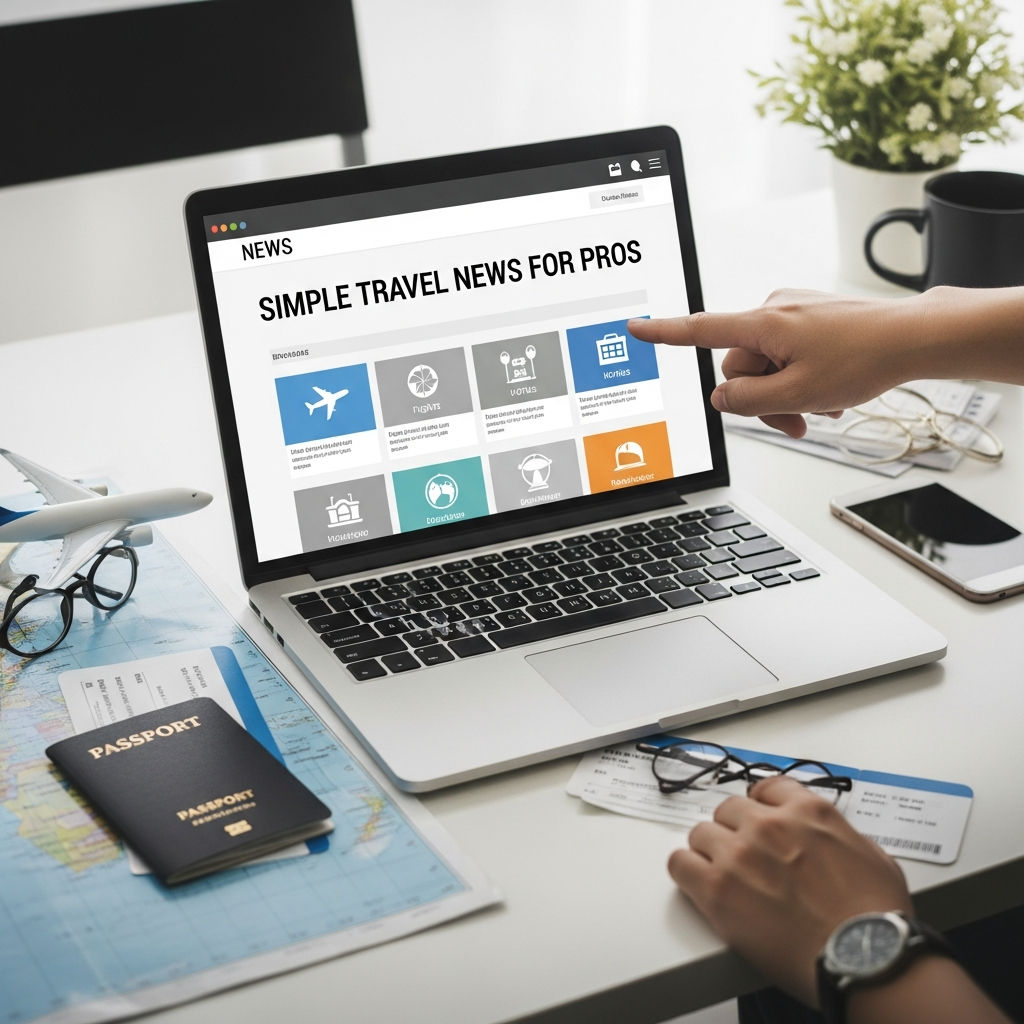
Introduction: Mastering the Flux of the Global Travel Industry

Introduction: Mastering the Flux of the Global Travel Industry

Introduction: Mastering the Flux of the Global Travel Industry

In the fast-paced world of tourism and hospitality, information is the most valuable currency. For travel professionals—be they travel agents, tour operators, or industry consultants—staying ahead of the curve isn’t just about curiosity; it is a business necessity. However, we live in an era of information overload. Between shifting geopolitical landscapes, fluctuating exchange rates, and the rapid evolution of travel technology (like NDC and AI), “Travel News” can quickly become a cacophony of noise.

The challenge for the modern pro is not finding news, but filtering it. To remain a trusted advisor to your clients, you need a streamlined, step-by-step approach to consuming travel news that prioritizes depth over volume. This guide provides a professional framework for simplifying your news intake, ensuring you spend less time scrolling and more time strategizing.

Step 1: Curating High-Value B2B Sources

The first mistake many pros make is relying on consumer-facing travel news. While mainstream outlets are great for general trends, they often lack the technical depth required for professional decision-making. To simplify your workflow, you must curate a shortlist of high-value B2B (Business-to-Business) sources.

  • Trade Publications: Prioritize outlets like Skift, PhocusWire, and Travel Weekly. These platforms focus on the “why” and “how” of industry shifts rather than just the “where.”
  • Official Regulatory Bodies: Bookmark the IATA (International Air Transport Association) and UN Tourism (formerly UNWTO) websites. These are the primary sources for regulatory changes and global statistics.
  • Regional Specializations: If your business focuses on a specific niche—such as luxury travel in Asia or European river cruises—subscribe to regional trade journals that offer boots-on-the-ground insights.

Step 2: Automating Your Information Pipeline

Pros do not have time to visit twenty different websites every morning. Simplification requires automation. By letting the news come to you in an organized fashion, you eliminate the “search friction” that leads to procrastination.

Utilizing RSS Feed Aggregators

Tools like Feedly or Inoreader allow you to pipe multiple RSS feeds into a single interface. You can categorize these feeds by topic—such as “Aviation News,” “Hospitality Tech,” or “Destination Marketing”—allowing you to scan headlines across dozens of publications in minutes.

Leveraging Google Alerts for Niche Tracking

For highly specific interests (e.g., “new hotel openings in Riyadh” or “EU visa policy updates”), Google Alerts is indispensable. Set up alerts for specific keywords to receive email notifications the moment a relevant article is indexed. This ensures you never miss a niche update that could impact your specific clientele.

Step 3: The Four-Pillar Categorization Method

Once the news reaches you, you need a mental framework to process it quickly. Not all news is created equal. To simplify your analysis, categorize every piece of travel news into one of four pillars:

  • Regulatory & Legislative: Changes in visa requirements, environmental taxes, or consumer protection laws. This news requires immediate operational adjustments.
  • Economic & Geopolitical: Currency fluctuations, fuel surcharges, or regional instability. This news impacts pricing and risk management.
  • Technological Innovation: The rollout of new booking engines, AI integration in customer service, or biometrics at airports. This news informs long-term digital strategy.
  • Consumer Sentiment & Trends: Shifts toward “slow travel,” “bleisure,” or sustainable tourism. This news dictates your marketing and product development.

Step 4: Verification and Vetting (Avoiding the Hype)

In the rush to be first, many news outlets publish speculative pieces. As a pro, your reputation depends on accuracy. Simple travel news consumption involves a “trust but verify” mindset. Before acting on a news story, perform a quick verification check:

Does the story cite a primary source, such as a government press release or an official corporate statement? If a headline seems too good (or bad) to be true, cross-reference it with a second reputable trade outlet. If the news concerns a specific airline or hotel chain, check their official “Media” or “Investor Relations” page. This 30-second habit prevents the spread of misinformation to your clients.

Step 5: Synthesizing News into Actionable Insights

Reading the news is passive; synthesizing it is professional. The final step in a simplified travel news routine is turning information into “Client Value.” Ask yourself: “How does this news change the advice I give my clients today?”

Creating a Weekly Briefing

Instead of sending sporadic updates, many top-tier travel pros compile a weekly internal (or client-facing) newsletter. This forces you to summarize the most important points and explain their implications. It positions you as a thought leader rather than just a source of information.

Strategic Pivoting

If news breaks about a major strike in a popular destination, a pro doesn’t just read about it—they immediately look at their booking calendar. Simplifying travel news means linking the headline directly to your CRM (Customer Relationship Management) system to proactively reach out to affected parties.

The Role of AI in Simplifying Professional Travel News

We cannot discuss modern travel news without mentioning Artificial Intelligence. AI tools can now summarize long industry reports or transcribe webinars into bulleted lists. For the busy professional, using an AI assistant to “TL;DR” (Too Long; Didn’t Read) a 50-page industry outlook report from McKinsey or Deloitte is a game-changer.

However, remember that AI lacks the “human touch” and industry intuition that you possess. Use AI to digest the data, but use your expertise to interpret the impact.

Conclusion: Building a 15-Minute Daily Routine

Staying informed doesn’t have to be a multi-hour ordeal. By following this step-by-step approach, you can master the flow of travel news in just 15 to 20 minutes a day:

  • 0-5 Minutes: Scan your aggregated RSS feed (Feedly) for “Breaking News” in the Regulatory and Economic pillars.
  • 5-10 Minutes: Read one deep-dive analysis piece from a trusted trade publication to understand a broader trend.
  • 10-15 Minutes: Note down one actionable insight to share with your team or clients via social media or email.

By simplifying your news intake, you transform from a passive consumer into a proactive industry leader. In the world of professional travel, the best-informed players are always the ones who know how to filter out the noise and focus on the signals that matter.


External Reference: Travel & Leasuire

Elevating Your Travel News Content: A Guide for Modern Journalists

Elevating Your Travel News Content: A Guide for Modern Journalists

“`html


6 Effective Tips to Improve Your Travel News

Elevating Your Travel News Content: A Guide for Modern Journalists

In the digital age, the travel industry is more than just a collection of destinations; it is a fast-paced news cycle fueled by shifting regulations, emerging trends, and evolving consumer preferences. Whether you are a dedicated travel journalist, a professional blogger, or a brand manager, the quality of your travel news dictates your authority and reach. With millions of articles published daily, simply reporting “what happened” is no longer enough to capture an audience’s attention.

To stand out, your travel news must be timely, accurate, and—most importantly—engaging. High-quality travel reporting bridges the gap between raw data and human experience. By refining your approach to content creation, you can turn a standard update into a viral story that resonates with globetrotters worldwide. Here are six effective tips to improve your travel news and boost your digital presence.

1. Prioritize Timeliness and Rigorous Fact-Checking

The “news” in travel news implies immediacy. In an era of social media, being the first to report on a major airline strike, a sudden border closure, or a new visa policy can significantly boost your traffic. However, speed should never come at the expense of accuracy. In the travel sector, misinformation can lead to real-world consequences, such as travelers being stranded or losing money on bookings.

  • Verify Your Sources: Always cross-reference information with official government websites, airline press releases, or primary sources on the ground.
  • Monitor Trends: Use tools like Google Trends and social listening platforms to identify breaking stories before they hit the mainstream.
  • Update Regularly: If a story is evolving, provide “Live Updates” or “Last Updated” timestamps to show your audience that you are providing the most current information available.

2. Master the Art of the Narrative Hook

While travel news often deals with logistics and statistics, the most successful pieces are those that tell a story. A dry report about a new high-speed rail line in Europe might get clicks, but a story about how that rail line transforms a 10-hour journey into a scenic 3-hour adventure will get shares. Your headline and your lead paragraph (the “hook”) are your most valuable assets.

Avoid generic headlines. Instead of “Airline Launches New Route,” try “How This New Direct Flight to Tokyo is Changing Luxury Travel in 2024.” Your lead should answer the essential journalism questions (who, what, where, when, why) while simultaneously sparking curiosity. By framing news through the lens of impact—how this news affects the reader’s next trip—you create an immediate connection.

3. Leverage Visual Storytelling and Multimedia

Travel is an inherently visual industry. If your travel news consists solely of long blocks of text, you are likely losing a significant portion of your audience. Integrating high-quality multimedia not only makes your content more aesthetic but also improves time-on-page metrics, which is a vital SEO signal.

  • Original Photography: Whenever possible, use original high-resolution images. Stock photos are fine in a pinch, but authentic visuals build trust.
  • Infographics: For complex news—such as new baggage fee structures or complex COVID-19 entry requirements—infographics can simplify the data for the reader.
  • Video Integration: Short-form video (like Reels or TikToks) or embedded YouTube clips can provide a “boots-on-the-ground” feel that text simply cannot replicate.

4. Optimize for Intent-Based SEO

As an SEO writer will tell you, visibility is everything. Improving your travel news means ensuring it can be found by those searching for it. However, modern SEO is less about “keyword stuffing” and more about “user intent.” Are readers looking for breaking news, or are they looking for a deep-dive analysis of how a new regulation affects their budget?

Use long-tail keywords that reflect how people actually speak or type into search engines. For example, instead of just “Bali Travel,” target “New Bali tourist tax 2024 update.” Additionally, ensure your technical SEO is on point: use descriptive alt-text for images, optimize your meta descriptions to encourage clicks, and ensure your site is mobile-friendly. Since many travelers check news while on the move, a slow or non-responsive mobile site will kill your engagement rates.

5. Add a Human Element and Local Perspective

What differentiates a professional travel news outlet from a generic news aggregator is the human element. Travel is about people, cultures, and experiences. When reporting news, try to include quotes from locals, travel experts, or the travelers themselves. This adds a layer of empathy and authority to your writing.

If you are reporting on the reopening of a historic site, don’t just list the opening hours. Include a comment from a local guide about what the reopening means for the community. This “on-the-ground” perspective transforms a piece of news into a piece of journalism. It provides context that AI-generated content or quick-repost sites often lack, establishing your brand as a thought leader in the space.

6. Provide Clear, Actionable Takeaways

The most effective travel news answers the reader’s unspoken question: “What does this mean for me?” Every piece of news you publish should have a “so what?” factor. If you are reporting on a currency fluctuation, explain how it impacts the purchasing power of tourists in that specific region. If you are reporting on a new hotel opening, provide a link to the booking site or a tip on the best time to visit.

Consider adding a “Quick Summary” box at the top of your articles or a “Key Takeaways” section at the end. In our “scan-first” reading culture, providing a concise summary of the news helps readers digest the information quickly while encouraging them to dive deeper into the full article if the details are relevant to their needs. By being helpful, you build a loyal readership that views your platform as a utility rather than just a news source.

Conclusion: The Path to Better Travel Reporting

Improving your travel news is a continuous process of balancing speed with substance. By focusing on timely accuracy, compelling narratives, and technical SEO, you can elevate your content above the noise of the internet. Remember that travel is an aspirational topic; even when reporting on “hard” news like delays or policy changes, maintaining a professional yet engaging tone will keep your audience coming back.

In the competitive landscape of travel media, the creators who succeed are those who provide the most value. Use these six tips to refine your strategy, and you will not only see an increase in your search engine rankings but also in the trust and loyalty of your readers. Start implementing these changes today to become a definitive voice in the world of travel news.


“`

External Reference: Travel & Leasuire

Fast Cover rolls out flexible travel insurance offerings

Fast Cover rolls out flexible travel insurance offerings


Fast Cover rolls out flexible travel insurance offerings | Insurance Business Australia


Offerings aim to redefine insurance for modern travelers in a post-pandemic environment

Fast Cover rolls out flexible travel insurance offerings

Travel

By Roxanne Libatique

Fast Cover has unveiled new travel insurance solutions targeting Australian travellers, addressing the surge in travel insurance demand as the industry recovers from the COVID-19 pandemic’s effects.

According to a Business Insider report, this move is part of the company’s commitment to providing tailored insurance policies that resonate with the preferences of today’s travelers, including adventure enthusiasts and families seeking leisurely vacations.

Flexible travel insurance policies

In a bid to simplify the travel insurance sales process, Fast Cover has introduced a suite of flexible policies. These policies are crafted to adapt to the dynamic travel environment, especially in consideration of the challenges posed by COVID-19, by offering coverage for related expenses.

Leveraging technology, Fast Cover enhances the customer experience with an online platform that simplifies obtaining insurance quotes and finalizing purchases for Australians.

The adaptation to evolving travel trends, especially the preference for domestic travel, is evident in Fast Cover’s new insurance offerings. These offerings now feature comprehensive domestic travel insurance plans that include a variety of protections, such as for car rental excess, personal belongings, and unexpected trip cancellations.

Fast Cover travel insurance benefits

Fast Cover assured Australian travellers, whether traveling domestically or internationally, of its commitment to providing round-the-clock emergency assistance.

Prospective clients are encouraged to review the Product Disclosure Statement and Target Market Determination available on Fast Cover’s website to ensure the services and advice align with their travel needs.

Related Stories


What Does It Cover and Is It Worth It?

Terms apply to American Express benefits and offers. Visit americanexpress.com to learn more.

On April 24, 2024, the White House established new rules for airlines, mandating automatic and timely refunds for passengers whose flights had been changed, delayed or canceled.

That’s a big relief to travelers, but there are still many unexpected situations where travel insurance can be a lifesaver before or during your trip.

“Travel insurance is often an overlooked investment until the unforeseen happens,” says Beth Godlin, president of Aon Affinity Travel Practice. “It’s designed to give travelers peace of mind and financial protection against travel risks.”

A policy doesn’t have to be expensive, according to Godlin, to add a layer of protection and security.

How do I get travel insurance?

Travel Guard® Travel Insurance

What does travel insurance cover?

Travel insurance generally covers your expenses, your belongings and your well-being. When shopping for a policy, look for these benefits:

Trip cancellation

If your trip is canceled for a covered reason, a policy will often reimburse airline tickets, hotel rooms, rental cars, tours, cruises and other prepaid, non-refundable expenses. Covered situations can include illness or injury, the death of a family member or traveling companion, job loss, military deployment and even unplanned jury duty, according to Allianz’s Daniel Durazo.

Cancellations can also be covered if a natural disaster, severe weather or airline strike prevents your carrier from getting you to your destination for at least 24 hours.

CFAR plans provide a lot more flexibility and typically reimburse 50% to 75% of your expenses. But they can bump up the cost by about 40%, said Durazo. Policyholders are also still usually required to cancel no later than 48 hours before their scheduled departure. 

Trip delay 

Should you experience a hiccup in your plans, your policy can provide some relief: Food, lodging and local transportation are usually covered if a delay is due to severe weather, airline maintenance or civil unrest.

“For a traveler to be eligible, they must be delayed for the minimum amount of time listed on their policy,” said Squaremouth spokesperson Megan Moncrief. “Some policies are very lenient and provide benefits for any length delay, while others list a length requirement — usually somewhere between three to 12 hours.”

Daily payout limits range from $150 to $250 per traveler, according to Moncrief, while the total policy limit can be anywhere from $500 to $2,000. Save any receipts to submit with your reimbursement claim.

Don’t miss: The best credit cards with trip delay insurance

Trip interruption

Should you need to cut your trip short due to illness or injury, or if there’s a family emergency back home, your policy may reimburse non-refundable expenses you forfeited.

It may also cover the cost of a one-way economy airline ticket home.

Baggage loss

Airlines are required to compensate passengers for luggage lost in transit, but a travel insurance policy may have a higher benefit limit. It could also cover you if your bags, passport or other possessions are lost, damaged or stolen once you’ve gotten to your destination.,

The Platinum plan from AXA Assistance USA has a $3,000 benefit limit for lost luggage, well beyond the $1,700 that airlines are required to provide on international flights. AXA has offices in more than 50 countries, with multilingual operators available 24 hours a day to help reschedule flights, book hotels and make other arrangements.

AXA Assistance USA Travel Insurance

New airline regulations in April 2024

How much does travel insurance cost?

Is travel insurance worth it?

Chase Sapphire Reserve®

Southwest Rapid Rewards® Plus Credit Card

American Express® Gold Card

Bottom line 

Meet our experts

Why trust CNBC Select?

For rates and fees for the American Express® Gold Card, click here.

Editorial Note: Opinions, analyses, reviews or recommendations expressed in this article are those of the Select editorial staff’s alone, and have not been reviewed, approved or otherwise endorsed by any third party.

How to Master Travel News in 20 Days: Your Ultimate Guide

How to Master Travel News in 20 Days: Your Ultimate Guide

How to Master Travel News in 20 Days: Your Ultimate Guide

In the fast-evolving world of travel, staying informed isn’t just an advantage—it’s a necessity. For avid travelers, industry professionals, content creators, and businesses, mastering travel news means understanding emerging trends, anticipating shifts, and making informed decisions. However, the sheer volume of information can be overwhelming, leading to information overload and missed opportunities.

Imagine being able to confidently navigate the latest destination news, airline policy changes, sustainable travel initiatives, and technological innovations. This 20-day intensive program is designed to transform you from a casual news consumer into a true travel news guru. We’ll equip you with the strategies, tools, and habits to effectively consume, analyze, and apply crucial travel industry updates, ensuring you’re always one step ahead.

The 20-Day Blueprint: Daily Immersion & Strategic Learning

This comprehensive plan breaks down the complex world of travel news into manageable, daily tasks. Each day builds upon the last, progressively honing your skills in identifying, evaluating, and synthesizing information. By the end of this journey, you’ll have cultivated a robust routine and a deep understanding of the global travel landscape.

Days 1-5: Building Your Foundation – Sources & Scanning

  • Day 1: Identify Core Global Travel News Outlets

    Begin by curating a list of the most reputable and comprehensive global travel news sources. Focus on publications that offer broad coverage and industry insights rather than just consumer travel deals.

    • **Action:** Bookmark major travel industry news sites like Skift, Phocuswire, Travel Weekly, and TTG. Explore the travel sections of top-tier news organizations (e.g., The New York Times, The Guardian, BBC).
  • Day 2: Explore Niche Travel Segments

    The travel industry is vast. Dive into specific niches that interest you or are relevant to your work. This helps you understand specialized travel trends.

    • **Action:** Find sources for luxury travel (e.g., Robb Report, Condé Nast Traveler Business), adventure travel, sustainable travel, business travel (e.g., Business Travel News), or specific regional news.
  • Day 3: Set Up Your News Aggregators & Alerts

    Combat information overload by centralizing your news intake. News aggregators and alerts are essential tools for efficient news consumption.

    • **Action:** Create accounts on platforms like Feedly or Flipboard and subscribe to your identified sources. Set up Google Alerts for key travel keywords such as “travel industry updates,” “sustainable travel news,” “new airline routes,” and specific destinations.
  • Day 4: Understand Key Travel Industry Players

    Familiarize yourself with the major organizations and entities that shape the travel world. Their announcements often drive significant travel news.

    • **Action:** Research organizations like IATA (International Air Transport Association), WTTC (World Travel & Tourism Council), UNWTO (UN World Tourism Organization), and major global hotel chains, airlines, and online travel agencies (OTAs). Follow their official newsrooms or press releases.
  • Day 5: Practice Daily Scanning & Skimming

    Develop the skill of quickly sifting through headlines and lead paragraphs to grasp the day’s top stories without getting bogged down. This is crucial for efficient news consumption strategies.

    • **Action:** Dedicate 30-45 minutes to rapidly scan your curated sources. Focus on identifying the main topic, key players, and potential impact of each news item. Don’t read articles in full yet, just grasp the gist.

Days 6-10: Deep Diving into Trends & Analysis

  • Day 6: Focus on Destination-Specific News

    Global events often have localized impacts. Understand how regions and countries are responding to travel changes and promotions.

    • **Action:** Select 2-3 key destinations (countries or cities) and find their official tourism board newsrooms or major local English-language news outlets. Track their specific destination news, tourism policies, and travel alerts.
  • Day 7: Analyze Airline & Airport News

    Airline and airport developments significantly impact travel logistics and pricing. Stay abreast of route changes, new aircraft, and technological advancements.

    • **Action:** Pay close attention to airline news regarding new routes, fleet orders, policy changes (e.g., baggage, refunds), and airport infrastructure projects. Follow dedicated airline news sites or blogs like The Points Guy for consumer-focused insights.
  • Day 8: Unpack Hotel & Accommodation Trends

    The hospitality sector is dynamic, with new hotel openings, innovative concepts, and evolving guest expectations.

    • **Action:** Research news on major hotel group expansions, independent hotel trends, alternative accommodations (e.g., Airbnb policies, glamping growth), and sustainability initiatives within hospitality.
  • Day 9: Monitor Cruise Industry Developments

    The cruise sector has unique challenges and opportunities. Understanding its specific news is vital for a holistic view of the travel industry.

    • **Action:** Track new ship launches, itinerary changes, health and safety protocols, and port developments. Follow cruise-specific news sites to stay informed about cruise news.
  • Day 10: Identify Emerging Travel Technology

    Technology is a massive disruptor and innovator in travel. Keeping an eye on tech advancements offers insight into future travel experiences.

    Content Illustration
    • **Action:** Seek out news on AI applications in travel, virtual reality (VR) tourism, blockchain for ticketing, contactless travel solutions, and other digital innovations. Sources like Phocuswire specialize in travel technology.

Days 11-15: Understanding Impact & Context

  • Day 11: Track Geopolitical & Economic Impacts on Travel

    Global events, from political shifts to economic downturns, directly influence travel patterns and confidence.

    • **Action:** Integrate major global news outlets into your routine to understand how geopolitical tensions, trade agreements, and currency fluctuations affect travel demand and pricing.
  • Day 12: Dive into Sustainable & Responsible Travel News

    With increasing awareness, sustainable travel is a major trend. Understand the initiatives and challenges in this critical area.

    • **Action:** Follow organizations and publications focused on eco-tourism, community-based tourism, carbon offsetting, and ethical travel practices. Look for reports on industry efforts towards greener operations.
  • Day 13: Understand Travel Policy & Regulation

    Government advisories, health mandates, and visa changes can drastically alter travel plans. Staying informed about these policies is essential for safe and legal travel.

    • **Action:** Regularly check official government travel advisories (e.g., State Department, Foreign Office) and IATA’s Travel Centre for up-to-date visa and health regulations.
  • Day 14: Analyze Consumer Behavior & Sentiment

    Understanding what motivates travelers and how their preferences are shifting is key to predicting future travel trends.

    • **Action:** Look for reports from market research firms (e.g., Deloitte, Euromonitor, Statista) on consumer travel surveys, booking patterns, and post-travel feedback. Monitor social media trends for sentiment.
  • Day 15: Start Curating & Summarizing Key Insights

    Move beyond just reading; begin actively processing the information. This helps solidify your understanding of travel industry insights.

    • **Action:** For your top 3-5 most relevant news items each day, write a brief 2-3 sentence summary. Identify the “who, what, when, where, why, and how it impacts travel.”

Days 16-20: Advanced Strategies & Long-Term Mastery

  • Day 16: Explore Travel Journalism & Content Creation Trends

    Understand how travel news is packaged and presented. This insight is valuable whether you’re a consumer or a creator of content.

    • **Action:** Analyze how different publications frame stories, use data, and engage readers. Identify innovative storytelling techniques in travel journalism.
  • Day 17: Engage with Industry Experts & Thought Leaders

    Supplement your news reading with direct insights from those shaping the industry. This provides deeper context and varied perspectives.

    • **Action:** Follow key travel industry figures on LinkedIn and Twitter. Listen to travel news podcasts (e.g., Skift Take) and watch webinars or industry conferences online.
  • Day 18: Practice Predictive Analysis

    Using the knowledge you’ve gained, start making educated guesses about future developments. This is a hallmark of truly mastering travel news.

    • **Action:** Based on current trends (e.g., vaccine development, sustainable investment), try to predict upcoming travel trends, challenges, or opportunities for the next 6-12 months.
  • Day 19: Develop a Personalized Daily News Routine

    Formalize your daily habit. Create a routine that fits your schedule and maximizes your efficiency in staying informed travel.

    • **Action:** Optimize your news consumption time. Do you prefer mornings? Evenings? Use your aggregators effectively. Determine how much time you’ll dedicate to scanning vs. deep-diving.
  • Day 20: Reflect & Refine Your Strategy

    The journey to mastering travel news is ongoing. Use this day to review your progress and plan for continuous learning.

    • **Action:** Review your sources, tools, and routine. What worked well? What needs adjustment? Identify areas for deeper exploration and commit to a lifelong learning approach to travel news.

Essential Tools and Resources for Travel News Mastery

  • **News Aggregators:** Feedly, Flipboard, Google News
  • **Industry Publications:** Skift, Phocuswire, Travel Weekly, TTG, Business Travel News
  • **General News with Travel Sections:** The New York Times, The Guardian, BBC Travel, Wall Street Journal
  • **Data & Research:** Statista, Euromonitor International, Deloitte reports (travel section)
  • **Official Bodies:** IATA, WTTC, UNWTO, national tourism boards
  • **Social Media:** Twitter lists of industry experts, LinkedIn for professional insights
  • **Podcasts:** Skift Take, The Business of Travel, Travel Trends Podcast
  • **Email Newsletters:** Subscribe to daily or weekly digests from your favorite industry publications.

Why Mastering Travel News Matters in 2024 and Beyond

The ability to effectively interpret and utilize travel news offers unparalleled benefits. It empowers travelers to make smarter booking choices and navigate dynamic regulations. For professionals, it provides a competitive edge, informs strategic planning, and enables swift adaptation to market changes. From understanding travel alerts and safety protocols to identifying the next big destination or investment opportunity, your mastery of travel news makes you a more informed, resilient, and insightful participant in the global travel narrative.

Your Journey to Becoming a Travel News Guru Starts Now!

This 20-day challenge is more than just reading; it’s about building a sustainable habit of informed curiosity. Embrace the process, commit to the daily tasks, and soon you’ll find yourself not just consuming travel news, but truly understanding and mastering it.

18 Essential Tips to Improve Your Travel News

18 Essential Tips to Improve Your Travel News

“`html


18 Essential Tips to Improve Your <a href="https://besttravelingever.com" target="_blank" rel="nofollow noopener" style="color: #2563eb; text-decoration: underline; font-weight: 500;">Travel News</a>

18 Essential Tips to Improve Your Travel News

In the vibrant, ever-evolving world of travel, delivering news that truly resonates with your audience is paramount. From breaking destination alerts to in-depth cultural explorations, the landscape is competitive and demanding. To cut through the noise and establish your voice as a go-to source for captivating travel news, it’s crucial to go beyond mere reporting. It requires a blend of insightful content creation, strategic distribution, and a deep understanding of your audience. Whether you’re a seasoned travel journalist, a burgeoning blogger, or a media outlet, these 18 essential tips will equip you with the strategies needed to dramatically improve your travel news, making it more engaging, authoritative, and widely discoverable.

Crafting Compelling Travel Content

1. Define Your Niche and Audience

Trying to appeal to everyone means appealing to no one. Instead, pinpoint a specific niche within the vast travel industry. Are you focusing on sustainable travel, luxury getaways, budget backpacking, adventure tourism, family vacations, or perhaps regional-specific news? Understanding your target audience’s demographics, interests, and pain points will allow you to tailor your content precisely, building a loyal readership who trusts your specialized expertise and keeps coming back for more of your unique travel news.

2. Stay Ahead with Trend Spotting

Great travel news isn’t just reactive; it’s proactive. Develop a keen eye for emerging travel trends, new destinations gaining popularity, shifts in traveler behavior, or innovative travel technologies. By identifying and reporting on these trends early, you position yourself as an industry thought leader, offering fresh perspectives and valuable insights long before the mainstream catches on. Subscribe to industry reports, follow trend forecasters, and actively monitor social media chatter to stay informed and provide cutting-edge travel news.

3. Diversify Your Content Formats

Don’t limit yourself to traditional articles. Expand your reach and appeal by experimenting with various content formats. Think beyond written pieces to include video reports, audio podcasts, interactive maps, infographics, photo essays, live Q&As, and even short-form social media stories. Each format appeals to different learning styles and consumption preferences, keeping your audience engaged across multiple platforms and enhancing the impact of your travel news.

4. Emphasize “Why” Over “What”

While reporting “what” is happening is fundamental, delving into “why” it matters elevates your travel news. Instead of merely stating a new airline route has launched, explore the economic impact, the cultural exchange opportunities, or the benefit to local tourism. Provide context, analysis, and a deeper understanding of the implications behind the news. This adds significant value and positions your content as insightful, not just informative, giving readers a reason to trust your perspective.

5. Create Evergreen Content

Not all news needs to be fleeting. Incorporate evergreen content – articles, guides, or features that remain relevant and valuable over time – into your strategy. These might include ultimate destination guides, “how-to” travel tips, historical travel insights, or comprehensive reviews of enduring travel gear. Evergreen content continues to attract organic traffic long after its publication date, serving as a consistent source of new readers and boosting your overall travel news authority.

Mastering the Art of Travel Storytelling

6. Weave Compelling Narratives

Travel news, at its heart, is about human experiences and discovery. Transform dry facts into captivating stories. Introduce characters (even if it’s the destination itself), build suspense, describe challenges overcome, and highlight moments of wonder. A well-crafted narrative evokes emotion, makes the content memorable, and helps readers connect on a deeper, more personal level with the places and events you’re reporting on, making your travel news truly unforgettable.

7. Employ Vivid, Sensory Language

Transport your readers directly to the destination through your words. Instead of merely saying “the beach was beautiful,” describe the “powdery white sand,” the “azure waters lapping gently,” the “scent of frangipani blossoms,” or the “distant cry of gulls.” Engage all five senses to create an immersive experience, allowing your audience to visualize, hear, smell, taste, and feel the essence of the place you’re covering, making your travel news come alive.

8. Write Magnetic Headlines

In a crowded digital space, your headline is often the first and only chance to grab attention. Craft headlines that are clear, concise, intriguing, and benefit-driven. Use strong verbs, numbers, and evocative language. A compelling headline promises value or sparks curiosity, making readers eager to click through and explore your content further. Test different headline variations to see what performs best and drives more engagement with your travel news.

9. Develop a Distinct Voice

What makes your travel news unique? Your voice. Cultivate a consistent and authentic tone that reflects your personality or your brand’s identity. Are you witty and humorous, authoritative and analytical, inspiring and adventurous, or warm and comforting? A unique voice helps you stand out from competitors, builds recognition, and fosters a stronger connection with your audience who come to appreciate your particular perspective and style of travel journalism.

Enhancing Impact with Visuals & Interactivity

10. Prioritize High-Quality Visuals

Visuals are non-negotiable for compelling travel news. Invest in stunning, high-resolution photographs that accurately represent the destination or event. Use infographics to simplify complex data, and consider custom illustrations for a unique touch. Ensure all images are properly credited, optimized for web performance, and directly relevant to the accompanying text, drawing the reader’s eye and adding context to your reporting.

Content Illustration

11. Integrate Engaging Video Content

Video is king in digital media. Incorporate short, impactful video clips for breaking news, vlogs for destination features, or interviews with local experts. Video offers a dynamic way to showcase a destination’s atmosphere, culture, and activities that static images cannot fully capture. Optimize videos for various platforms and consider embedding them directly into your articles for a richer user experience, making your travel news more immersive.

12. Utilize Interactive Elements

Boost engagement by adding interactive elements to your travel news. This could include embedded Google Maps to show locations, quizzes about travel facts, polls about reader preferences, virtual reality (VR) experiences, or clickable “hotspots” on images that reveal more information. Interactive content makes the experience more immersive and encourages readers to spend more time on your page, enhancing their connection to your stories.

Boosting Discoverability and Reach

13. Conduct Smart Keyword Research

For your travel news to be found, it needs to be optimized for search engines. Thorough keyword research is the foundation of effective SEO. Identify what terms and phrases your target audience uses when searching for travel information. Integrate these keywords naturally into your headlines, subheadings, body text, image alt tags, and meta descriptions to improve your organic search rankings and ensure your valuable content reaches a wider audience.

14. Optimize for Mobile-First Readability

A significant portion of your audience will likely consume travel news on their smartphones or tablets. Ensure your website and content are fully responsive and optimized for mobile viewing. Fast loading times, easy navigation, readable fonts, and properly sized images on small screens are crucial for a positive user experience, which Google also rewards in its search rankings. A seamless mobile experience is no longer a luxury but a necessity.

15. Structure for Readability and SEO

Beyond keywords, organize your content logically with clear headings (H2, H3), subheadings, bullet points, and short paragraphs. This improves both readability for your audience and scannability for search engine crawlers. A well-structured article makes it easier for readers to digest information and helps search engines understand the hierarchy and relevance of your content, boosting its discoverability and authority as reliable travel news.

16. Leverage Social Media Strategically

Social media is a powerful distribution channel for travel news. Share your content across relevant platforms (Instagram, Facebook, Twitter, Pinterest, TikTok, LinkedIn) with compelling captions, relevant hashtags, and eye-catching visuals. Engage with your followers, participate in discussions, and analyze which platforms and content types yield the best results for reaching and growing your audience. Adapt your strategy to each platform’s unique dynamics for maximum impact.

17. Build an Engaged Email List

An email newsletter remains one of the most effective ways to maintain a direct connection with your most engaged readers. Encourage sign-ups on your website and regularly send out curated updates, exclusive content, or early access to your latest travel news. This builds a loyal community, drives repeat traffic to your site, and provides a reliable channel independent of fluctuating social media algorithms, ensuring your message always gets through.

Fostering Trust and Community

18. Prioritize Authenticity and Credibility

In an age of misinformation, trust is your most valuable asset. Always fact-check your information rigorously, cite your sources, and be transparent about any sponsored content. Present balanced perspectives, avoid sensationalism for its own sake, and correct errors promptly. Establishing a reputation for accuracy, impartiality, and genuine reporting will foster long-term loyalty and authority in the travel news space, making your publication a trusted resource.

Conclusion

Improving your travel news isn’t a one-time fix but an ongoing journey of refinement and innovation. By implementing these 18 essential tips, you’ll be well-equipped to create more captivating, discoverable, and credible content. From defining your niche and mastering storytelling to leveraging visuals, optimizing for search engines, and building an engaged community, each strategy plays a vital role in elevating your travel news. Embrace these practices, adapt to new technologies, and continue to explore the world with curiosity, sharing its wonders and stories in ways that truly inspire and inform your audience. Your journey to better travel news starts now!

“`

Rock City Hotel presented best proposal for 60% stake in four hotels

The Social Security and National Insurance Trust (SSNIT) has explained its decision to sell a 60% stake in its hotel to Rock City Hotel owned by Dr Bryan Acheampong, the Minister for Food and Agriculture.

SSNIT’s response came after North Tongu MP, Samuel Okudzeto Ablakwa, petitioned the Commission on Human Rights and Administrative Justice (CHRAJ) to investigate and stop the sale of six hotels including Labadi Beach Hotel, La Palm Royal Beach Resort, Elmina Beach Resort, Ridge Royal Hotel, Busua Beach Resort, and the Trust Lodge Hotel to the Abetifi MP.

Mr Ablakwa’s petition to CHRAJ seeks an investigation into various allegations, including conflict of interest, abuse of power, lack of due process, procurement breaches, cronyism, and graft.

“In my petition, I am inviting CHRAJ to investigate grave matters concerning conflict of interest, abuse of power, lack of due process, procurement breaches, cronyism, and graft.”

“I have also drawn attention to blatant violations of Article 78(3) and 98(2) of the 1992 Constitution as diligent checks from Parliament’s Committee on Office of Profit revealed that Hon. Bryan Acheampong has not applied and does not have the permission of the Speaker of Parliament to hold an office of profit,” he said.

But SSNIT in a response explained that the decision to partner with an investor is to raise capital to invest in their hotels, and also assist in their management, started as far back as 2018 through International Competitive Tendering (ICT) processes as prescribed by the Public Procurement Act.

In a press release, the Trust stated that the process started in November 2018 after it had employed a Transaction Advisor, to guide the selection of a Strategic investor among others.

“The Trust commenced the process with the engagement of a Transaction Advisor through the ICT method of procurement, with publication of advertisements in the Daily Graphic on 14th November, 2018 and in the Ghanaian Times on 15th November, 2018.

“The advertisement was also published in an international magazine, The Economist in its January 5-11, 2019 edition.
As of the January 16th, 2019 deadline, fifteen (15) firms had expressed interest in submitting bids. Of these, six (6) were shortlisted and issued with Request for Proposal (RFP) documents.

“Approval was sought from the Central Tender Review Committee (CTRC) for the selection of a Transaction Advisor on 12th December 2019 and that was granted on 24th December 2019. Following the selection of the independent Transaction Advisor to guide the selection of a Strategic investor among others others, further advertisements for an Expression of Interest (EOI) for a Strategic Partner for the SSNIT Hotels were published in the Daily Graphic on 3rd February 2022 and in the Ghanaian Times on 7th February 2022. The advertisement was also published in The Economist Magazine on 26th February 2022.”

“Based on the criteria set out in the RFP, Rock City Hotel submitted the best and strongest technical and financial proposal among those received. consequently, it is in negotiation with SSNIT to buy a 60% stake in each of the four (4) hotels (Labadi Beach Hotel, La Palm Royal Beach Resort, Ridge Royal Hotel and Elmina Beach Resort).

“Bids for Busua Beach Resort and the Trust Lodge were considered to be unsuccessful so they are no longer part of the hotels covered in this process.”

Click HERE to read the full Media Release from SSNIT

Cornstalk Hotel in New Orleans French Quarter up for sale | BusinessNews

The historic Cornstalk Hotel, the 208-year-old French Quarter landmark that shut down four years ago during the pandemic and never reopened, is back on the market after a sale of the property fell through earlier this year.

The boutique hotel — named for the cornstalk pattern of its cast-iron fence — is one of the historic neighborhood’s iconic properties. Located in the 900 block of Royal Street two blocks from Jackson Square, it has been featured in countless movies and TV shows, most notably Elvis Presley’s 1958 classic “King Creole.”

The asking price for the property is $5.2 million, according to the database of commercial property listings.


NO.hotel.052124

The historic Cornstalk Hotel in the French Quarter, which never reopened after shutting down during the pandemic four years ago, is back on the market for sale after a deal to sell the property fell through earlier this year. (Staff photo by John McCusker, The Times-Picayune | NOLA.com)


“It’s a fabulous property and we’ve had a lot of interest,” said Michael Bain of Dorian Bennett Sotheby’s, who is listing the property. “It’s a historic building in a historic district.”

Rich history

The Cornstalk Hotel was built as a private residence in 1816 for Francois Xavier Martin, the state’s first attorney general and, later, a long-serving justice of the Louisiana Supreme Court. The famous fence came 40 years later, when a subsequent owner commissioned it for his wife, a native of Iowa, who missed the cornfields of home (or so legend has it).

The fence is one of just two in the city — the other is in the Garden District — and was created by a Philadelphia ironworks firm. In addition to ears of corn, the fence has pumpkins at the bases of the columns entwined by vines and morning glories. An iron butterfly adorns the gate.


NO.hotel.052124

The historic Cornstalk Hotel in the French Quarter, which never reopened after shutting down during the pandemic four years ago, is back on the market for sale after a deal to sell the property fell through earlier this year. (Staff photo by John McCusker, The Times-Picayune | NOLA.com)


The house was damaged by fire in 1900 and renovated in the Queen Anne style for which it is known today, with its turret and bay. It was converted to a hotel early in the 20th century and has hosted Paul Newman, Richard Burton and Elizabeth Taylor, and Bill and Hillary Clinton, according to Fodor’s Travel.

Interested buyers

In more recent years, the hotel, which boasts fireplaces, stained glass windows and canopy beds in the 14 guestrooms, was managed by HRI Hospitality. It’s not clear why hotel owner Deborah Spencer chose not to reopen after tourists began to return to the city after the pandemic.


NO.hotel.052124

The historic Cornstalk Hotel in the French Quarter, which never reopened after shutting down during the pandemic four years ago, is back on the market for sale after a deal to sell the property fell through earlier this year. (Staff photo by John McCusker, The Times-Picayune | NOLA.com)


In August, Spencer said by phone that the property was undergoing a renovation and would eventually reopen, but she declined to provide additional details. She could not be reached for comment Monday.

In the meantime, Bain said the hotel has been actively listed for sale even though there’s no “For Sale” sign on the gate. He said the online listing has attracted the interest of several potential buyers, including a local hotel group, which entered into a purchase agreement several months ago to buy the property.

“But they’re in the middle of doing another renovation and they decided to back out of the deal for a little while, through no fault of ours,” he said. “They said they’ll come back to us in the fall.”