Historic Hotel of America: The Biltmore Los Angeles inducted into famed organization | Business

The Biltmore Los Angeles was inducted into Historic Hotels of America, the official program of the National Trust for Historic Preservation for recognizing and celebrating the finest historic hotels in the United States.

“Historic Hotels of America is delighted to induct The Biltmore Los Angeles, a Beaux-Arts style hotel built and opened on Oct. 2, 1923,” said Lawrence Horwitz, executive vice president of Historic Hotels of America.

“We commend The Biltmore Los Angeles team for its careful historic preservation work, stewardship and vision that will allow future generations of travelers to experience this unique historic destination.”

The Biltmore Los Angeles is managed by Millennium Hotels and Resorts.

To be selected for Historic Hotels of America, a hotel must be at least 50 years old; Been designated by the US Secretary of the Interior as a National Historic Landmark, eligible for listing in the National Register of Historic Places; and recognized as having historic significance.

“This prestigious recognition is a testament to the rich history, timeless elegance and exceptional hospitality that has defined The Biltmore for a century,” said Jimmy Wu, general manager and owners representative.

“Since our doors opened in 1923, we have had the honor of hosting presidents, celebrities, and discerning travelers from around the world, each leaving with unforgettable memories of their time spent within our hallowed halls.

“Being welcomed into the Historic Hotels of America family further underscores our commitment to preserving and celebrating our heritage while continuing to provide unparalleled experiences for our cherished guests.”

Read the fine print: Winnipeg couple’s travel insurance claims ‘not covered,’ insurer says

Read the fine print: Winnipeg couple’s travel insurance claims ‘not covered,’ insurer says

A Winnipeg senior is questioning the value of buying flight cancellation insurance after his claim was denied.

James Parker, 78, and his wife, Rena, bought two tickets on WestJet flights to Calgary last December to visit relatives in January. They purchased the cheapest ticket option knowing they wouldn’t get a refund or credit should they need to cancel, so they decided to get cancellation insurance just in case.

The insurance was a cheaper option than the more expensive tickets.

“Pre-COVID, we didn’t really buy cancellation insurance,” James Parker said.

Because there have been so many delays with airlines since the pandemic, Parker said he thought he would get insurance for peace of mind. After he selected his tickets and seats, he clicked on the box for cancellation insurance.

“It was $117, I think, something like that,” he recalled. “It gives me a little bit of peace of mind, you know, so that’s what I did.”

A few weeks later, he says, they got a call that their accommodations would no longer be available because their relative’s condo had been flooded and she was forced to move out for six weeks. The Parkers had rented a condo in the building, but were told they would no longer be able to stay there.

WestJet refunded Parker’s seat selection, but he was still out $623.72 on the cost of the flight. He filed a claim with Allianz Global Assistance Canada, thinking he would be covered. He wasn’t.

The photo shows an expense claim was denied because the reason was not listed as a covered reason in the policy.
Allianz Global Assistance rejected Parker’s claim because the flood that made his accommodation unavailable was not a ‘covered reason’ under his cancellation policy plan. He initially submitted the claim for $823.72 but later phoned to let Allianz know he received $200 from WestJet for seat selection and was only claiming $623.72 from the insurer. (Submitted by James Parker)

“I mean, it said cancellation insurance. Quite honestly, I didn’t read the fine print,” Parker said.

“You would think there would be some leeway … it was impossible for us at the time to make other arrangements.”

A spokesperson for Allianz Global Assistance said the trip cancellation and interruption plan offered through WestJet does not cover disasters that affect prepaid accommodations at the insured’s destination.

“In general, for prepaid travel expenses to be eligible for reimbursement under trip cancellation benefits, the reason for cancellation must be listed as a ‘covered reason’ within the customer’s policy of insurance,” wrote Tayjua Squire, manager of corporate communications for Allianz Global .

She said a copy of the policy would have been provided to the customer at time of purchase.

Squire said all travelers should review their policy to understand the scenarios that are covered, and those that are not.

He believed his claim was reasonable and would therefore be refunded for the canceled flight, but later learned if it’s not listed as a covered reason no refund is provided.

“I thought it was unfair, and I questioned my idea about what insurance is for,” he said.

94% of claims are paid: insurance association

The Travel Health Insurance Association of Canada says a recent survey showed 94 per cent of travel insurance claims were paid.

“The benefits are there for many Canadians when they’re purchasing it. It’s the unfortunate times when the coverage expectations don’t line up with the actual wording of the policy,” said the association’s executive director, Will McAleer.

He says policies vary and advises purchasers to become familiar with what’s covered before boarding the flight.

Will McAleer is wearing a light blue pinstriped collared shirt.  He's sitting in front of a picture of a dock floating in a body of water.
Will McAleer, executive director of the Travel Health Insurance Association of Canada, says people should familiarize themselves with their cancellation policy before they travel. (Zoom)

“They put policies in and they price them according to the wording that they’ve got, so it’ll cover certain things in one policy, but maybe not another,” McAleer said.

For example, one of the “covered reasons” listed on Allianz Global’s website includes a disaster “that renders your pre-booked destination accommodation uninhabitable after you book your trip.” In that case, the Parkers would have been covered, but that option was not included in the WestJet policy he purchased.

“It’s not unusual for insurers in the Canadian market to have many different policy wordings depending on the partner or partnership that they’re working on. And those can differ in terms of coverages and provisions,” McAleer said.

Parker feels he had a valid reason to cancel his trip and should have it covered.

“It’s the principle more than the money that is bothering me at the moment,” he said, adding travel insurance policies need to be more nuanced.

“I understand it’s a business to make money, but I think there should be a way to deal with changes or modifications that arise, because not everything can be written down, you know? I mean, it’s life,” Parker said.

He said in the future he would rather buy travel insurance from a local company, and not just tick off a box and hope he will be covered if anything happens.

Winnipegger denied flight refund even though he bought cancellation insurance

Allianz Global Assistance says disaster at a pre-booked accommodation is not a covered reason under the policy.

170 Ukrainian residents of Leitrim hotel told to move by the end of the month

Lough Allen Hotel, Drumshanbo, County Leitrim has been home to Ukrainian refugees for the past two years.

The hotel, which is housing around 170 people, is predominantly used by women and children.

However, the hotel’s contract is coming to an end and the residents must vacate the property by May 31, 2024.

It is believed the residents were informed of the move at a recent meeting and hotel management has attempted to have the contract extended to allow the residents to stay at the hotel.

The Department of Children, Equality, Disability, Integration and Youth (DCEDIY) said it will provide residents with alternative options, however, it is unknown where they will be moved too.

The residents can also seek to find a private rental option.

A spokesperson for The Department of Children, Equality, Disability, Integration and Youth (DCEDIY) said, “Temporary accommodation for those fleeing the war in Ukraine was provided at the Lough Allen Hotel, Drumshanbo, County Leitrim.

“This arrangement is due to come to an end shortly.

“All accommodation contracted by the Department is temporary in nature, moves occur frequently when contracts end.

“Those who are residing at the accommodation have been contacted by the Department to notify them of the change.

“Alternative offers of accommodation will be provided to the residents, and every effort will be made to ensure that the alternative accommodation will be in the general area.

“Beneficiaries of temporary protection are also entitled to make their own private arrangements, including potentially availing of pledged accommodation if they wish or private accommodation, and can avail of some supports to do so.”

7 common travel insurance mistakes to avoid when holidaying abroad

Almost a third of holidaymakers buy travel insurance on the day they jet off, according to new data from GoCompare. But leaving it to the last minute is risky.

While in theory you can purchase a policy right up until the point you leave home for your trip, and even at the airport, failing to get organized in time could mean you miss out on vital elements of cover.

It’s not the only mistake made when taking out travel insurance. Here, Which? explains why it’s unwise to buy cover at the eleventh hour and reveals six other blunders travelers make when purchasing cover.

1. Waiting to the last minute

GoCompare looked at travel insurance policies bought during 2023 and found just over one in four people purchased a policy in the week leading up to their trip. But one in three did it on the day of travel.

Individual travelers are most likely to be tardy: 35% bought it within hours of take-off, compared with 22% of couples and 24% of families.

The danger of leaving it to the last minute, however, is that you might not be covered for everything you need. Cancellation cover, for example, is unlikely to be included if you’re purchasing a policy just hours before your flight. Rhys Jones, travel insurance spokesperson for GoCompare, said last-minute travel insurance could also exclude cover for pre-existing conditions.

Buying earlier doesn’t only mean you have more cover, however. You also have the time to shop around for the best cover for the destination you’re traveling to and your circumstances.

  • Find out more: travel insurance explained

2. Buying when already abroad

If you forget to take out travel insurance before your trip and do it while enjoying your foreign holiday, most policies are likely to be void and you won’t be able to claim should the worst happen.

Holidaymakers in this situation do have some, limited, options. According to GoCompare, they can buy a specialist post-departure travel insurance, which should provide the same level of cover as a standard travel insurance policy.

But this type of cover is only available from a small number of companies, so there will be less choice and they may be more expensive. If you do buy this policy, you may also have to wait 24, 48 or 72 hours before it begins. This is an anti-fraud measure introduced by insurers to stop people buying a policy when they’ve already encountered a problem.

  • Find out more: best travel insurance

3. Not declaring medical conditions

It can be tempting not to mention pre-existing medical conditions when purchasing a new travel insurance policy. That’s because they can push up the cost of premiums or mean you can’t make any claims that relate to the condition.

In March 2023 we surveyed 2,458 policyholders with a medical condition or a history of one, and 36% reported problems purchasing cover. Expensive premiums were the most common complaint.

But lying about your health issue could result in your travel policy being invalidated and means you have to cover the cost of any medical expenses needed on your trip yourself. In some cases, costs can quickly escalate to tens of thousands of pounds.

There are, however, specialist providers that provide affordable cover for customers who struggle to find it elsewhere. Take a look at us best travel insurance for pre-existing medical conditions guide to help get travel insurance if you’ve been ill or have a long-term condition.

4. Going beyond policy limits

A holiday of sun, sea and sand is enough for many people looking to escape a gray British summer, but for others a holiday also means taking part in some fun activities – whether it’s paragliding or snorkelling. But not all sports are covered by standard travel insurance.

There are usually limits on pursuits, so while many policies will cover a range of sports and leisure activities, including diving, cycling, kayaking or other water sports, they may not allow you to claim for winter sports such as skiing. If you want cover for that, you’ll need to buy extra cover, usually sold as an add-on.

Hiking and trekking are other activities which may not be covered if they are the sole purpose of the trip. That’s because long-distance walks to remote areas and reaching high-altitudes increases the likelihood of needing urgent medical help or assistance, such as an air ambulance. Adventure holidays therefore require you to find specialist insurance.

  • Find out more: best winter sports travel insurance.

This newsletter delivers free money-related content, along with other information about Which? Group products and services. Unsubscribe whenever you want. Your data will be processed in accordance with us Privacy policy

5. Trip length is too short

If you buy an annual policy that covers multiple trips, you might assume you’re covered for any length of trip.

Many insurers, however, put a time limit on how long they will cover you for, per trip – usually 31 days. If you want to travel for more than a month, you’ll need to take out a long-stay policy; this sometimes called extended or backpacker insurance. But be aware that this type of policy doesn’t cover multiple trips, just one long getaway.

6. Forgetting cruise holidays need special cover

Many holidaymakers booked to go on a cruise may not realize they need specialist travel insurance. These policies are designed to cover problems that could arise while you’re on this type of trip – such as missed port departures or transport to a hospital if you fall ill while at sea.

It’s often a mandatory requirement, and the cruise operator may not let you on board without it. You can buy cruise travel insurance as an add-on to standard travel insurance, or buy a specialist policy.

  • Find out more: best cruise insurance

How to find the best travel insurance policy

As always, the first step is to shop around for the best deal. Price comparison sites allow you to view multiple travel insurance quotes at a glance and also include policies for high-risk countries. The main ones for insurance are Compare the Market, Confused.com, GoCompare and MoneySuperMarket.

Once you’ve found a deal that is right for you, check how Which? reviewed the provider and policy.

Finally, check the policy wording carefully before you buy, as well as any general exclusions and conditions.


Which? Limited is registered in England and Wales to 2 Marylebone Road, London NW1 4DF, company number 00677665 and is an Introducer Appointed Representative of the following: 1. Inspop.com Ltd for the introduction of non-investment motor, home, travel and pet insurance products (FRN 610689). Inspop.com Ltd is authorized and regulated by the Financial Conduct Authority (FCA) to provide advice and arrange non-investment motor, home, travel and pet insurance products (FRN310635) and is registered in England and Wales to Greyfriars House, Greyfriars Road, Cardiff, South Wales, CF10 3AL, company number 03857130. Confused.com is a trading name of Inspop.com Ltd. 2. LifeSearch Partners Limited (FRN 656479), for the introduction of Pure Protection Contracts, who are authorized and regulated by the FCA to provide advice and arrange Pure Protection Contracts. LifeSearch Partners Ltd is registered in England and Wales to 3000a Parkway, Whiteley, Hampshire, PO15 7FX, company number 03412386. 3.Optimise Media Limited (FRN 313408), for the introduction of HSBC Group, who is authorized and regulated by the Financial Conduct Authority to provide credit brokering activities. Optimise Media is registered in England and Wales to Exchange Street Buildings, 35-37 Exchange Street, Norwich, England, NR2 1DP and company number 04455319. We do not make, nor do we seek to make, any recommendations or personalized advice on financial products or services that are regulated by the FCA, as we’re not regulated or authorized by the FCA to advise you in this way. In some cases, however, we have included links to regulated brands or providers with whom we have a commercial relationship and, if you choose to, you can buy a product from our commercial partners. If you go ahead and buy a product using our link, we will receive a commission to help fund our not-for-profit mission and our campaigns work as a champion for the UK consumer. Please note that a link alone does not constitute an endorsement by Which?.

The ‘largest new resort’ in Cape May County set for grand opening – NBC10 Philadelphia

The ‘largest new resort’ in Cape May County set for grand opening – NBC10 Philadelphia

Organizers, elected officials and other “guests and dignitaries” are set to gather in Wildwood Crest, NJ, on Thursday afternoon for the ribbon cutting of a property that is said to be the largest single resort in all of Cape May County.

On Thursday afternoon, Donald Cabrera, the mayor of Wildwood Crest will join Dan Alicea, president of Madison Resorts for the ribbon cutting on the $52 million Madison Resort Wildwood Crest — a property created after the company purchased The Oceanview Motel followed by the addition of the Royal Hawaiian in Wildwood Crest and to combine the two into one resort.

Organizers said, in a statement ahead of Thursday’s grand opening, that the new resort will “bring together the historic doo-wop stylings of the Oceanview Motel and combine it with the iconic Royal Hawaiian property next door, for one giant resort that will feature 200 guest rooms, three restaurants, two pools, cabana and poolside seating for 100+, two hot tubs, beachfront weddings, two fitness centers, five conference rooms, two rooftop event spaces and pet-friendly accommodations.”

The ‘largest new resort’ in Cape May County set for grand opening – NBC10 Philadelphia


Provided

A look at a pool at the Madison Resort Wildwood Crest in Wildwood Crest, NJ.

In a statement, Alicea said this was a project two years in the making.

“We’re thrilled to bring our Madison Resorts family to the Wildwood Crest community,” he said in a statement. “With this opening, we’re excited to help save and preserve an important piece of Wildwood Crest history, while bringing the Jersey shore its largest new resort. We’ve invested more than $52 [million] in this project as we’re feeling bullish about the future of Wildwood Crest, Cape May and the Jersey Shore.”

Organizers said that they performed “major top to bottom renovations at both former hotels – while celebrating and preserving the doo-wop style architecture that Oceanview Motel was famous for.”

The new resort will offer over 200 rooms, three restaurants, two pools, two hot hubs and a wealth of other amenities.

For those looking to visit the new property, organizers say that the first tower of rooms is immediately available for those who want to be the first guests to experience the resort, with all towers and rooms online by grand opening weekend starting May 16th.

For more details, visit the Madison Resort Wildwood Crest’s website: www.madisonresortwildwoodcrest.com.

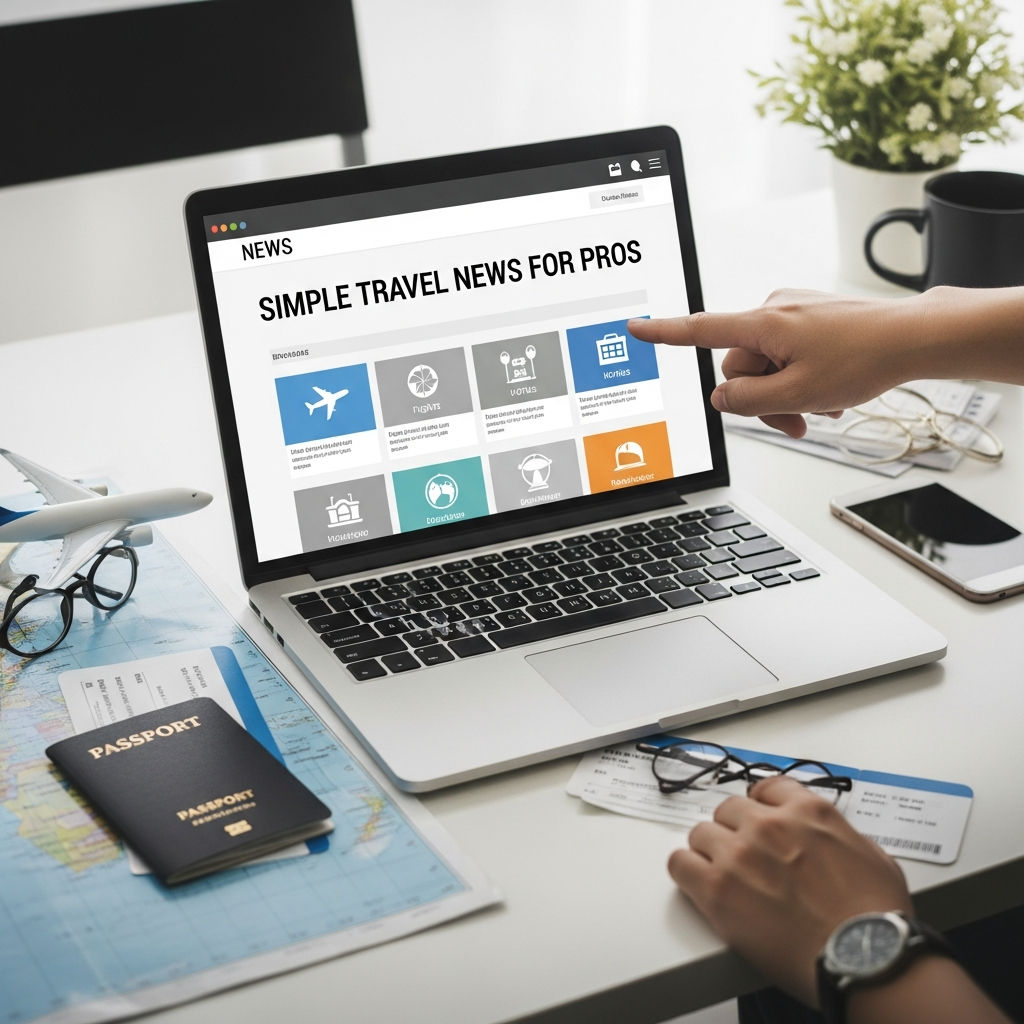
Step-by-Step: Simple Travel News for Pros

Step-by-Step: Simple Travel News for Pros

Step-by-Step: Simple Travel News for Pros

In the fast-paced world of the travel industry, information is more than just data—it is currency. For travel agents, tour operators, and corporate travel managers, staying ahead of the curve isn’t just about personal interest; it’s about providing value to clients and maintaining a competitive edge. However, the sheer volume of “breaking news” can quickly lead to information overload. If you spend your entire morning scrolling through headlines, you aren’t working on your business.

The secret to mastering travel news isn’t reading more; it’s reading smarter. This guide provides a step-by-step framework for travel professionals to streamline their news consumption, filter out the noise, and transform raw information into actionable business intelligence.

Step 1: Curate Your “Gold Standard” Sources

The first step in simplifying travel news is to stop relying on general consumer news outlets. While sites like CNN Travel or the BBC are great for the general public, pros need industry-specific insights that cover policy, tech shifts, and supply chain updates. To simplify your intake, you must narrow your focus to a few high-authority “Gold Standard” sources.

  • Trade Publications: Focus on outlets like Travel Weekly, Skift, and Phocuswire. These sites provide the “why” behind the news, focusing on the business implications rather than just the destination fluff.
  • Government and Regulatory Bodies: Bookmark the U.S. State Department’s travel advisories or the IATA (International Air Transport Association) dashboard. These are the primary sources for safety and border regulation updates.
  • Niche-Specific Blogs: If you specialize in luxury travel, follow Luxury Travel Advisor. If you are in the cruise sector, Cruise Critic’s industry section is indispensable.

Step 2: Automate Information Gathering

A professional doesn’t have time to visit twenty different websites every morning. You need the news to come to you. Automation is the key to simplicity. By setting up systems to aggregate headlines, you can view everything in one place.

RSS Feeds and Aggregators: Use tools like Feedly or Inoreader. By subscribing to the RSS feeds of your “Gold Standard” sources, you can scan hundreds of headlines in a single interface. You can even categorize them by “Airlines,” “Hotels,” or “Sustainability.”

Google Alerts: For hyper-specific news—such as updates on a specific hotel brand or a particular destination—set up Google Alerts. This ensures that if a major event happens in your specific niche, you are the first to know without having to search for it.

Curated Newsletters: Instead of checking a website, subscribe to “The Daily” from Skift or similar morning briefings. These are designed for professionals and summarize the top three to five stories you actually need to care about that day.

Step 3: The 15-Minute Filter Technique

To avoid falling down the “rabbit hole” of endless scrolling, implement the 15-minute filter. Set a timer for 15 minutes at the start of your workday. During this time, your goal is not to read entire articles, but to categorize news into three buckets:

  • Immediate Action: News that affects current bookings or immediate client safety (e.g., a sudden strike at Heathrow or a new visa requirement).
  • Strategic Knowledge: News that affects future planning (e.g., a new hotel opening in 2025 or a shift in airline loyalty programs). Save these to a “Read Later” app like Pocket or Instapaper.
  • Noise: Human interest stories, celebrity travel, or general destination PR that has no impact on your business. Ignore these immediately.

Step 4: Decode News for Your Clients

A true travel pro doesn’t just pass on a link; they interpret the news. This is where you provide “Simple Travel News” to your own audience. When you see a major industry update, ask yourself: “How does this affect my specific clients?”

Content Illustration

For example, if you read that a major airline is changing its baggage policy, don’t just note the fact. Think about your clients who have upcoming flights with that carrier. The news becomes a “pro tip” you send to them, which reinforces your value as an expert who is looking out for their interests.

Step 5: Leverage Social Media for Real-Time Pulse

While trade journals provide the “hard facts,” social media provides the “pulse.” For travel pros, platforms like LinkedIn and X (formerly Twitter) are essential for hearing what colleagues are experiencing on the ground. However, you must use these platforms surgically.

  • Follow Industry Leaders: Follow CEOs of major hotel chains and airline analysts. Their commentary often precedes official press releases.
  • Join Professional Groups: Private Facebook or LinkedIn groups for travel agents often report on “boots-on-the-ground” issues—like a specific resort’s renovation noise—long before it hits the news cycle.
  • Use Lists: On X, create a private list of 10-15 trusted industry insiders. Check this list specifically rather than your main feed to avoid distractions.

Step 6: Content Distribution and Thought Leadership

Once you have simplified the news for yourself, use it to build your brand. Being a “Pro” means being a thought leader. Use the most interesting pieces of news you’ve gathered to fuel your marketing efforts.

A simple way to do this is the “Weekly Three” email or social post. Every Friday, share three news items and your brief take on why they matter. This keeps your clients informed without overwhelming them, and it positions you as the go-to expert who filters the complex world of travel for them.

Why Simplicity Matters in the Travel Industry

The travel industry is susceptible to “headline fatigue.” Whether it’s fluctuating fuel prices, geopolitical shifts, or the rise of AI in booking systems, the news can feel heavy. By adopting a step-by-step, simplified approach, you protect your mental bandwidth.

Simplicity allows you to remain proactive rather than reactive. When you have a streamlined system for travel news, you aren’t surprised by changes; you are prepared for them. You move from being a passive consumer of information to a strategic advisor who uses news as a tool for success.

Conclusion: Consistency is Key

Mastering travel news for pros doesn’t happen overnight. It requires setting up the right systems and sticking to them. By curating your sources, automating your intake, and filtering for relevance, you can stay informed in less than 20 minutes a day. This leaves you with more time to do what you do best: creating incredible travel experiences for your clients.

Remember, in the world of travel, the person with the most information isn’t the winner—the person with the most useful information is. Start simplifying your news today, and watch your professional authority grow.

External Reference: Travel & Leasuire

Introduction: Mastering the Flux of the Global Travel Industry

Introduction: Mastering the Flux of the Global Travel Industry

Introduction: Mastering the Flux of the Global Travel Industry

In the fast-paced world of tourism and hospitality, information is the most valuable currency. For travel professionals—be they travel agents, tour operators, or industry consultants—staying ahead of the curve isn’t just about curiosity; it is a business necessity. However, we live in an era of information overload. Between shifting geopolitical landscapes, fluctuating exchange rates, and the rapid evolution of travel technology (like NDC and AI), “Travel News” can quickly become a cacophony of noise.

The challenge for the modern pro is not finding news, but filtering it. To remain a trusted advisor to your clients, you need a streamlined, step-by-step approach to consuming travel news that prioritizes depth over volume. This guide provides a professional framework for simplifying your news intake, ensuring you spend less time scrolling and more time strategizing.

Step 1: Curating High-Value B2B Sources

The first mistake many pros make is relying on consumer-facing travel news. While mainstream outlets are great for general trends, they often lack the technical depth required for professional decision-making. To simplify your workflow, you must curate a shortlist of high-value B2B (Business-to-Business) sources.

  • Trade Publications: Prioritize outlets like Skift, PhocusWire, and Travel Weekly. These platforms focus on the “why” and “how” of industry shifts rather than just the “where.”
  • Official Regulatory Bodies: Bookmark the IATA (International Air Transport Association) and UN Tourism (formerly UNWTO) websites. These are the primary sources for regulatory changes and global statistics.
  • Regional Specializations: If your business focuses on a specific niche—such as luxury travel in Asia or European river cruises—subscribe to regional trade journals that offer boots-on-the-ground insights.

Step 2: Automating Your Information Pipeline

Pros do not have time to visit twenty different websites every morning. Simplification requires automation. By letting the news come to you in an organized fashion, you eliminate the “search friction” that leads to procrastination.

Utilizing RSS Feed Aggregators

Tools like Feedly or Inoreader allow you to pipe multiple RSS feeds into a single interface. You can categorize these feeds by topic—such as “Aviation News,” “Hospitality Tech,” or “Destination Marketing”—allowing you to scan headlines across dozens of publications in minutes.

Leveraging Google Alerts for Niche Tracking

For highly specific interests (e.g., “new hotel openings in Riyadh” or “EU visa policy updates”), Google Alerts is indispensable. Set up alerts for specific keywords to receive email notifications the moment a relevant article is indexed. This ensures you never miss a niche update that could impact your specific clientele.

Step 3: The Four-Pillar Categorization Method

Once the news reaches you, you need a mental framework to process it quickly. Not all news is created equal. To simplify your analysis, categorize every piece of travel news into one of four pillars:

  • Regulatory & Legislative: Changes in visa requirements, environmental taxes, or consumer protection laws. This news requires immediate operational adjustments.
  • Economic & Geopolitical: Currency fluctuations, fuel surcharges, or regional instability. This news impacts pricing and risk management.
  • Technological Innovation: The rollout of new booking engines, AI integration in customer service, or biometrics at airports. This news informs long-term digital strategy.
  • Consumer Sentiment & Trends: Shifts toward “slow travel,” “bleisure,” or sustainable tourism. This news dictates your marketing and product development.

Step 4: Verification and Vetting (Avoiding the Hype)

In the rush to be first, many news outlets publish speculative pieces. As a pro, your reputation depends on accuracy. Simple travel news consumption involves a “trust but verify” mindset. Before acting on a news story, perform a quick verification check:

Does the story cite a primary source, such as a government press release or an official corporate statement? If a headline seems too good (or bad) to be true, cross-reference it with a second reputable trade outlet. If the news concerns a specific airline or hotel chain, check their official “Media” or “Investor Relations” page. This 30-second habit prevents the spread of misinformation to your clients.

Step 5: Synthesizing News into Actionable Insights

Reading the news is passive; synthesizing it is professional. The final step in a simplified travel news routine is turning information into “Client Value.” Ask yourself: “How does this news change the advice I give my clients today?”

Creating a Weekly Briefing

Instead of sending sporadic updates, many top-tier travel pros compile a weekly internal (or client-facing) newsletter. This forces you to summarize the most important points and explain their implications. It positions you as a thought leader rather than just a source of information.

Strategic Pivoting

If news breaks about a major strike in a popular destination, a pro doesn’t just read about it—they immediately look at their booking calendar. Simplifying travel news means linking the headline directly to your CRM (Customer Relationship Management) system to proactively reach out to affected parties.

The Role of AI in Simplifying Professional Travel News

We cannot discuss modern travel news without mentioning Artificial Intelligence. AI tools can now summarize long industry reports or transcribe webinars into bulleted lists. For the busy professional, using an AI assistant to “TL;DR” (Too Long; Didn’t Read) a 50-page industry outlook report from McKinsey or Deloitte is a game-changer.

However, remember that AI lacks the “human touch” and industry intuition that you possess. Use AI to digest the data, but use your expertise to interpret the impact.

Conclusion: Building a 15-Minute Daily Routine

Staying informed doesn’t have to be a multi-hour ordeal. By following this step-by-step approach, you can master the flow of travel news in just 15 to 20 minutes a day:

  • 0-5 Minutes: Scan your aggregated RSS feed (Feedly) for “Breaking News” in the Regulatory and Economic pillars.
  • 5-10 Minutes: Read one deep-dive analysis piece from a trusted trade publication to understand a broader trend.
  • 10-15 Minutes: Note down one actionable insight to share with your team or clients via social media or email.

By simplifying your news intake, you transform from a passive consumer into a proactive industry leader. In the world of professional travel, the best-informed players are always the ones who know how to filter out the noise and focus on the signals that matter.

External Reference: Travel & Leasuire

Elevating Your Travel News Content: A Guide for Modern Journalists

Elevating Your Travel News Content: A Guide for Modern Journalists

“`html


6 Effective Tips to Improve Your Travel News

Elevating Your Travel News Content: A Guide for Modern Journalists

In the digital age, the travel industry is more than just a collection of destinations; it is a fast-paced news cycle fueled by shifting regulations, emerging trends, and evolving consumer preferences. Whether you are a dedicated travel journalist, a professional blogger, or a brand manager, the quality of your travel news dictates your authority and reach. With millions of articles published daily, simply reporting “what happened” is no longer enough to capture an audience’s attention.

To stand out, your travel news must be timely, accurate, and—most importantly—engaging. High-quality travel reporting bridges the gap between raw data and human experience. By refining your approach to content creation, you can turn a standard update into a viral story that resonates with globetrotters worldwide. Here are six effective tips to improve your travel news and boost your digital presence.

1. Prioritize Timeliness and Rigorous Fact-Checking

The “news” in travel news implies immediacy. In an era of social media, being the first to report on a major airline strike, a sudden border closure, or a new visa policy can significantly boost your traffic. However, speed should never come at the expense of accuracy. In the travel sector, misinformation can lead to real-world consequences, such as travelers being stranded or losing money on bookings.

  • Verify Your Sources: Always cross-reference information with official government websites, airline press releases, or primary sources on the ground.
  • Monitor Trends: Use tools like Google Trends and social listening platforms to identify breaking stories before they hit the mainstream.
  • Update Regularly: If a story is evolving, provide “Live Updates” or “Last Updated” timestamps to show your audience that you are providing the most current information available.

2. Master the Art of the Narrative Hook

While travel news often deals with logistics and statistics, the most successful pieces are those that tell a story. A dry report about a new high-speed rail line in Europe might get clicks, but a story about how that rail line transforms a 10-hour journey into a scenic 3-hour adventure will get shares. Your headline and your lead paragraph (the “hook”) are your most valuable assets.

Avoid generic headlines. Instead of “Airline Launches New Route,” try “How This New Direct Flight to Tokyo is Changing Luxury Travel in 2024.” Your lead should answer the essential journalism questions (who, what, where, when, why) while simultaneously sparking curiosity. By framing news through the lens of impact—how this news affects the reader’s next trip—you create an immediate connection.

3. Leverage Visual Storytelling and Multimedia

Travel is an inherently visual industry. If your travel news consists solely of long blocks of text, you are likely losing a significant portion of your audience. Integrating high-quality multimedia not only makes your content more aesthetic but also improves time-on-page metrics, which is a vital SEO signal.

  • Original Photography: Whenever possible, use original high-resolution images. Stock photos are fine in a pinch, but authentic visuals build trust.
  • Infographics: For complex news—such as new baggage fee structures or complex COVID-19 entry requirements—infographics can simplify the data for the reader.
  • Video Integration: Short-form video (like Reels or TikToks) or embedded YouTube clips can provide a “boots-on-the-ground” feel that text simply cannot replicate.

4. Optimize for Intent-Based SEO

As an SEO writer will tell you, visibility is everything. Improving your travel news means ensuring it can be found by those searching for it. However, modern SEO is less about “keyword stuffing” and more about “user intent.” Are readers looking for breaking news, or are they looking for a deep-dive analysis of how a new regulation affects their budget?

Use long-tail keywords that reflect how people actually speak or type into search engines. For example, instead of just “Bali Travel,” target “New Bali tourist tax 2024 update.” Additionally, ensure your technical SEO is on point: use descriptive alt-text for images, optimize your meta descriptions to encourage clicks, and ensure your site is mobile-friendly. Since many travelers check news while on the move, a slow or non-responsive mobile site will kill your engagement rates.

5. Add a Human Element and Local Perspective

What differentiates a professional travel news outlet from a generic news aggregator is the human element. Travel is about people, cultures, and experiences. When reporting news, try to include quotes from locals, travel experts, or the travelers themselves. This adds a layer of empathy and authority to your writing.

If you are reporting on the reopening of a historic site, don’t just list the opening hours. Include a comment from a local guide about what the reopening means for the community. This “on-the-ground” perspective transforms a piece of news into a piece of journalism. It provides context that AI-generated content or quick-repost sites often lack, establishing your brand as a thought leader in the space.

6. Provide Clear, Actionable Takeaways

The most effective travel news answers the reader’s unspoken question: “What does this mean for me?” Every piece of news you publish should have a “so what?” factor. If you are reporting on a currency fluctuation, explain how it impacts the purchasing power of tourists in that specific region. If you are reporting on a new hotel opening, provide a link to the booking site or a tip on the best time to visit.

Consider adding a “Quick Summary” box at the top of your articles or a “Key Takeaways” section at the end. In our “scan-first” reading culture, providing a concise summary of the news helps readers digest the information quickly while encouraging them to dive deeper into the full article if the details are relevant to their needs. By being helpful, you build a loyal readership that views your platform as a utility rather than just a news source.

Conclusion: The Path to Better Travel Reporting

Improving your travel news is a continuous process of balancing speed with substance. By focusing on timely accuracy, compelling narratives, and technical SEO, you can elevate your content above the noise of the internet. Remember that travel is an aspirational topic; even when reporting on “hard” news like delays or policy changes, maintaining a professional yet engaging tone will keep your audience coming back.

In the competitive landscape of travel media, the creators who succeed are those who provide the most value. Use these six tips to refine your strategy, and you will not only see an increase in your search engine rankings but also in the trust and loyalty of your readers. Start implementing these changes today to become a definitive voice in the world of travel news.


“`

External Reference: Travel & Leasuire