
The Soul of the Quad: Why Your Campus Tour Strategy is Probably Wrong
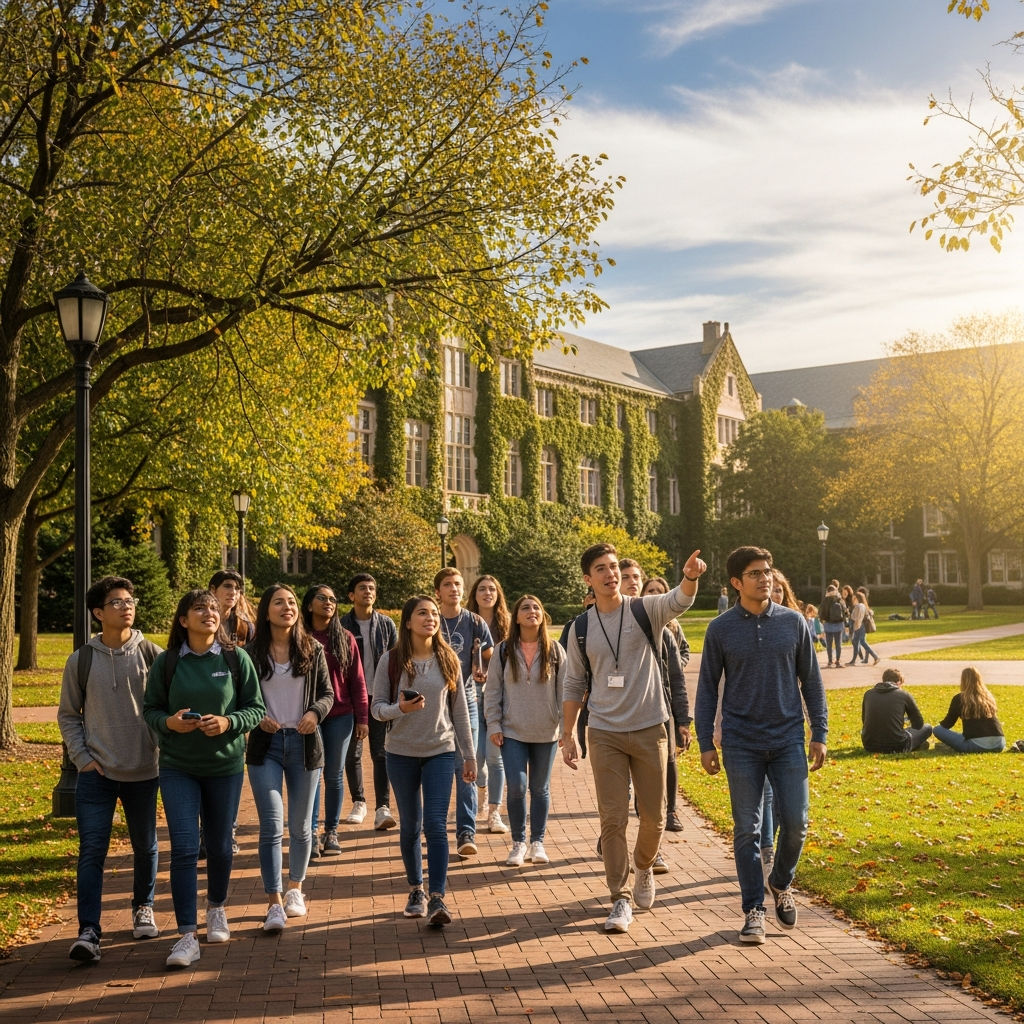
I’ve walked hundreds of campus miles. From the ivy-draped brick walls of New England to the sun-scorched concrete quads of Southern California, I’ve seen the same scene play out a thousand times. A group of fifteen nervous teenagers and their even more nervous parents trailing behind a hyper-caffeinated sophomore walking backward. The guide is reciting a script about the student-to-faculty ratio, while the parents are squinting at the architecture and the students are looking at their shoes. This is the traditional campus tour. It is also, in my professional opinion, a colossal waste of everyone’s time if you don’t know how to look past the performance.
After five years in admissions and consulting, I’ve realized that the “official” tour is a marketing product. It’s a highlight reel. If you want to actually understand if you’re going to spend the next four years of your life thriving or miserable, you have to break the fourth wall. You have to look for the things they aren’t showing you. You need to see the grit, not just the granite.
The Deception of the Standard Route
Universities are master illusionists. They’ve curated a specific path—the “Gold Route”—designed to hit the newest gym, the most high-tech lab, and the most picturesque fountain. They will intentionally steer you away from the 1970s brutalist dorms that haven’t been renovated since your parents were in diapers. I remember leading a tour once where I was explicitly told to avoid the north side of the library because the HVAC system was clanking like a haunted house. That’s the stuff you actually need to hear. If the air conditioning doesn’t work in the library during finals week, that’s a much bigger deal than the “state-of-the-art” rock climbing wall you’ll use exactly twice.
The real campus exists in the margins. It’s in the bulletin boards covered in three-week-old flyers for obscure indie bands and protest meetings. It’s in the way students interact with the janitorial staff or how they look at 4:00 PM on a Tuesday. Are they smiling? Or do they look like they’ve been crushed by a mountain of organic chemistry homework? That vibe is something no brochure can quantify, yet it’s the most important metric you have.
Decoding the Student Guide
Your tour guide is your best and worst resource. They are usually paid, trained, and vetted to be the “face” of the institution. They are professional enthusiasts. I’ve seen guides who could sell a cardboard box as a luxury penthouse. To get the truth, you have to ask questions that don’t have a scripted answer. Instead of asking about “safety,” which will yield a generic answer about blue-light phones, ask them: “When was the last time you felt genuinely uncomfortable on campus at night?” Their hesitation—or lack thereof—will tell you everything.
Watch their eyes when they talk about their professors. Is there a genuine spark of mentorship, or are they just reciting a name they saw on a syllabus? Most guides are honest people, but they are operating within a framework. To get them to break character, you have to be the one who asks about the “worst” part of their week. Usually, the answer involves the bureaucracy of financial aid or the quality of the dining hall pizza. Those small grievances are the reality of student life.
The Dining Hall Litmus Test
If you want the unvarnished truth, ditch the tour for an hour and sit in the dining hall. This is the heart of the ecosystem. Don’t look at the food—buffet food is mediocre everywhere, let’s be honest. Look at the tables. Are they segregated by cliques, or is there a messy, beautiful mix of people? Is the energy loud and communal, or is everyone staring at their phones in a sterile silence? I once visited a prestigious liberal arts college where the dining hall felt like a library. Nobody was laughing. It felt heavy. On paper, it was a top-ten school. In reality, it was a pressure cooker that I knew my student would hate.
Then there’s the “stray talk.” Listen to the conversations happening at the next table. Are they talking about the lecture they just left, or are they complaining about how impossible it is to get a seat in the library? This is the cultural DNA of the school. You can’t fake this during a scheduled visit. It’s the raw, unfiltered data of the student experience.
The Parent Trap: Know Your Role
I’m going to be blunt here: Parents, you are often the biggest obstacle to a successful campus tour. I’ve seen parents hijack the entire 60-minute session asking about parking permits or the specific brand of laundry machines in the dorms. Stop. Your child is the one living there. Every time you ask a question that focuses on your anxieties rather than their experience, you’re taking up space they need to process the environment. Your job is to be the silent observer, the driver, and the provider of snacks. Let the student lead the inquiry.
The most successful tours I’ve witnessed are the ones where the parents stay ten paces behind. They let the student walk up to the guide. They let the student decide which building looks “cool” or “depressing.” Choosing a college is an emotional decision masquerading as a logical one. If the student doesn’t feel the “click” when they walk across the green, no amount of statistics about post-grad employment will change that. Don’t talk them into a school they feel lukewarm about just because the rankings are high.
Logistics That Actually Matter
Forget the “walking shoes” advice. Everyone knows that. What people forget is the timing. If you visit a campus during Spring Break or a quiet Friday afternoon, you aren’t seeing the school. You’re seeing a museum. You need to see the chaos of the passing period. You need to see the library at 10:00 PM. If you can, stay overnight. Many schools offer hosting programs, but even if they don’t, grab an Airbnb nearby. Walk the local streets. Is there a coffee shop where students actually hang out, or is the campus an isolated island surrounded by nothingness?
Also, check the trash cans. I know it sounds crazy. But a campus with overflowing bins and litter is a campus with a morale problem or a funding crisis. It sounds petty until you realize you’re paying sixty thousand dollars a year to live there. Maintenance is a proxy for how much the administration actually cares about the daily life of the students versus the “big ticket” projects that look good for donors.
One more thing: go to the department you’re interested in. Don’t wait for the tour to take you there—they might not. Walk into the building for the History department or the Engineering school. Look at the offices. Are the professors’ doors open? Are there students hanging out in the hallways talking to faculty? If the doors are all shut and the halls are empty, that department is a ghost town. No amount of shiny lab equipment can replace a professor who actually wants to talk to you.
The Post-Tour Reality Check
The moment you get back to the car, don’t ask, “So, what did you think?” That’s too big. Instead, ask something specific: “Could you see yourself drinking a coffee on that bench every morning for four years?” College is a collection of mundane moments. It’s not just the graduation ceremony or the big football game. It’s the walk to class in the rain. It’s the 2:00 AM study sessions. If the “mundane” of that specific campus feels right, you’ve found the winner.
I’ve seen students choose “lesser” schools because the light hit the quad a certain way and they felt at home. Some might call that irrational. I call it the only metric that matters. You are buying a home, a social circle, and a mindset—not just a degree. If the tour feels like a sales pitch, it’s because it is. Your job is to look past the salesman and see the house for what it really is: drafty windows, squeaky floors, and all. Only then can you decide if you want to move in.
