The Grit and the Glory: Surviving the Controlled Chaos of Dorm Life
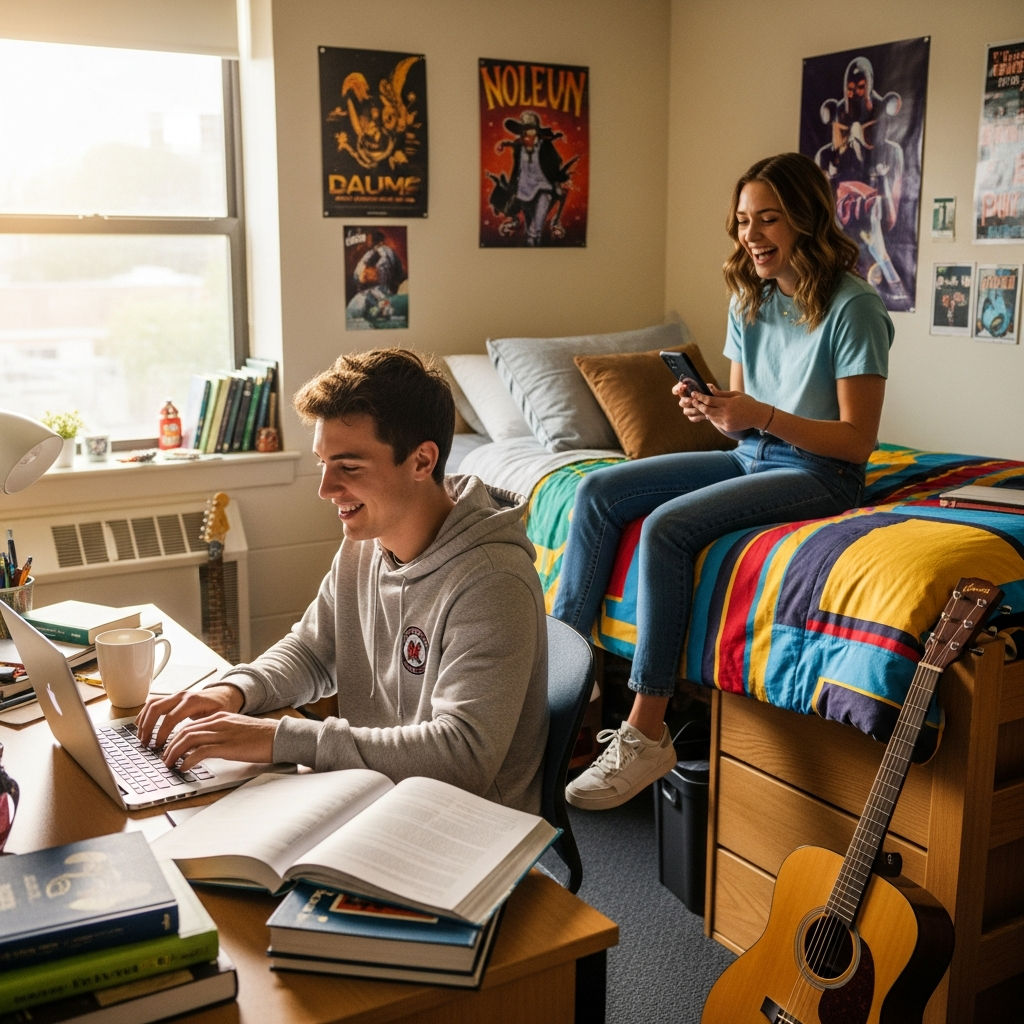
I remember the smell most vividly. It wasn’t the smell of fresh laundry or the “new beginnings” promised in the university brochure. It was a thick, unmistakable cocktail of burnt popcorn, industrial-grade floor wax, and the damp scent of three dozen wet towels hanging in a poorly ventilated hallway. I spent six years living within those concrete walls—four as an undergrad trying to find my footing and two as a Resident Assistant trying to keep the lid on the boiling pot. If you are looking for a sterilized, Pinterest-perfect guide to dorm decor, you are in the wrong place. This is about the raw, unfiltered reality of living in a 12-by-12-foot shoebox with a stranger.
The Psychological Experiment of the Shared Square
There is something fundamentally unnatural about taking two people from completely different backgrounds, tossing them into a room that barely fits two twin-XL beds, and expecting them to coexist peacefully. We call it “dorm life,” but in many ways, it is a high-stakes psychological experiment. I once had a roommate who insisted on sleeping with a white noise machine set to “Tropical Thunderstorm” at max volume, while I was someone who needed pin-drop silence to function. We didn’t solve it through a polite “roommate agreement” form. We solved it through three weeks of passive-aggressive sticky notes and one heated 2 AM confrontation over a broken fan. That is the real curriculum of college. You learn more about conflict resolution, boundary setting, and human empathy in a dorm room than you ever will in a Macroeconomics lecture.
The lack of privacy is a shock to the system that no one truly prepares you for. Suddenly, your bed is your couch, your dining table, and your only sanctuary. You learn to develop a “privacy bubble”—that mental state where you can be three feet away from someone and pretend they don’t exist. It’s a necessary survival skill. I’ve seen students crumble under the weight of this constant proximity, and I’ve seen others thrive by turning their floor into a miniature village. The difference usually lies in realizing that your roommate isn’t your new best friend; they are your first business partner in the enterprise of independent living. Treat the relationship with that level of respect and distance, and you might just survive the semester without a noise complaint.
The Communal Bathroom and Other Rites of Passage
If the dorm room is the laboratory, the communal bathroom is the front line. There is a specific kind of humility that comes with walking down a hallway in a bathrobe, clutching a plastic caddy, only to find that all six shower stalls are taken by people singing off-key. But beyond the logistical nightmare of hair-clogged drains and the “is that water or something else?” floor puddles, the communal bathroom is the great equalizer. It’s where I saw the campus star athlete crying over a failed exam and where I had some of the most profound philosophical debates of my life while brushing my teeth. There is no ego in a communal shower area. You see everyone at their most vulnerable, most tired, and most unrefined.
I’ve always argued that students who skip the dorm experience for a luxury off-campus apartment miss out on a crucial hardening process. You need the inconvenience. You need to wait for a dryer at 11 PM on a Sunday only to find someone has dumped your wet clothes on top of a dusty machine. These minor irritations build a layer of “social callus” that is vital for the real world. If you can navigate the politics of a shared kitchen—where someone is always stealing the milk and the microwave perpetually smells like fish—you can navigate any corporate office environment. It’s about learning to occupy space without stepping on everyone else’s toes, a lesson that is increasingly rare in our curated, digital-first lives.
The Myth of the 24/7 Social Life
One of the biggest lies sold to incoming freshmen is that dorm life is an endless parade of late-night pizza parties and hallway hangouts. The reality is much lonelier, at least initially. I remember sitting in my room during the first week, listening to the muffled sounds of laughter from the floor above, convinced that everyone else had found their “tribe” while I was staring at a pile of textbooks. This “FOMO” (Fear Of Missing Out) is the silent killer of the dorm experience. It drives students to keep their doors open when they desperately need a nap, or to join every intramural team just to feel included.
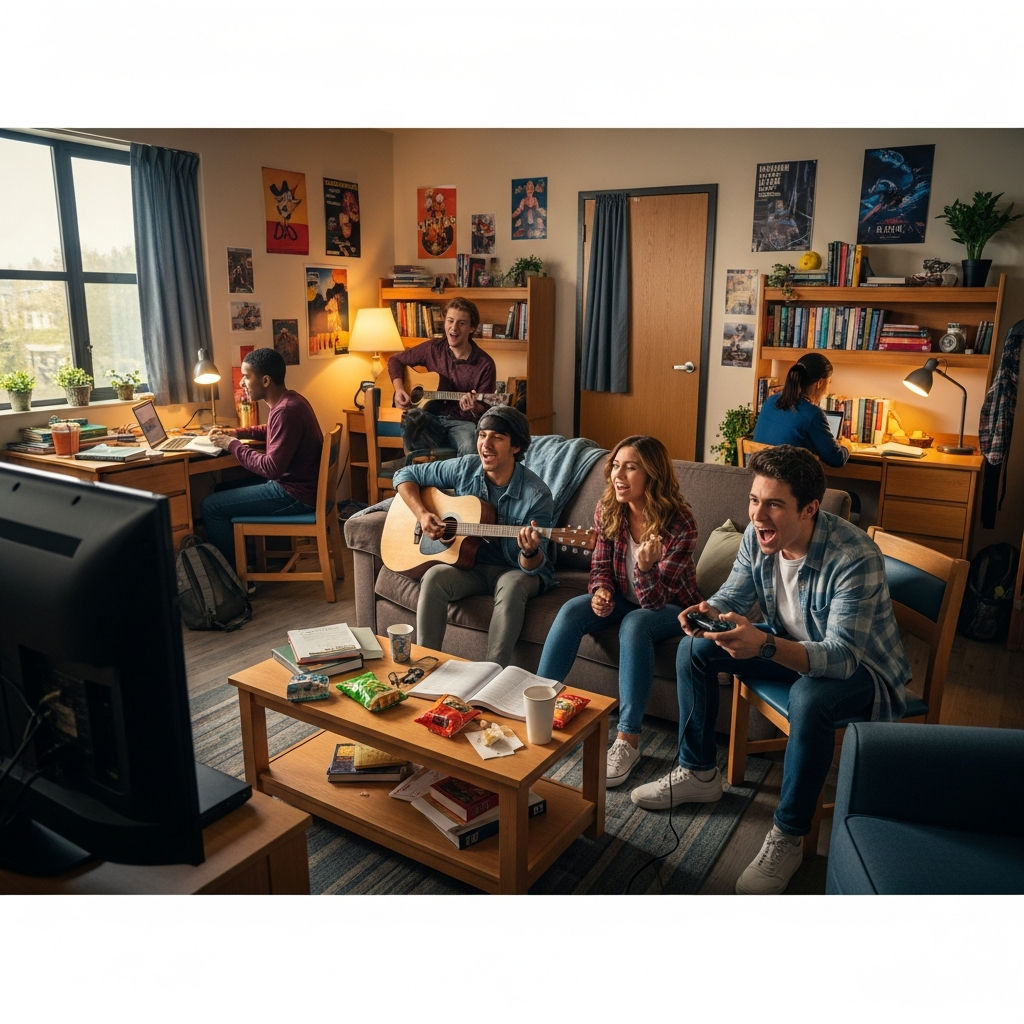
The truth is, dorm life is a series of peaks and valleys. There are nights when the hallway feels like the center of the universe, with spontaneous movie marathons and deep-dive vent sessions about professors. But there are also long stretches of quiet isolation, especially during finals week when the air turns heavy with caffeine-fueled anxiety. I learned that the best way to handle the social pressure is to stop trying so hard. The best friendships I made weren’t during the “forced fun” of orientation week; they were the result of running into the same person at the vending machine every night at midnight. It’s the consistency of presence, not the intensity of the interaction, that builds real bonds in a residence hall.
Survival Gear: Moving Beyond the Checklist
When you look at those “college essentials” lists, they tell you to buy color-coordinated pillows and expensive desk lamps. As someone who has lived through the trenches, I can tell you those things are useless. If you want to survive dorm life, invest in a high-quality pair of noise-canceling headphones and a very long charging cable. Your headphones are your “Do Not Disturb” sign; they are the only way to carve out a private world in a public space. And the long cable? Because the genius who designed dorm rooms in 1974 decided that the only outlet should be behind the heaviest wardrobe in the room.
Also, let’s talk about the “midnight snack” economy. In a dorm, food is more than sustenance; it is social currency. I once saw a guy trade a single cup of premium ramen for a week’s worth of math notes. Keeping a stash of snacks isn’t just about curbing hunger; it’s about having a reason for people to stop by your room. But there’s a dark side to this—the “Freshman 15” isn’t a myth, it’s a byproduct of the 2 AM delivery culture. You have to be careful, or you’ll find yourself living on a diet of energy drinks and cold fries, wondering why your skin looks like gray parchment and your brain feels like mush. Balance is hard when the dining hall offers unlimited soft-serve ice cream, but your body will eventually demand a vegetable. Don’t ignore it.
The RA Factor: Rules, Responsibility, and Red Tape
Being a Resident Assistant changed my perspective on dorm life forever. I went from being the one causing the noise to the one having to knock on the door and ask for silence while feeling like a total buzzkill. It’s a thankless job. You are a therapist, a janitor, a mediator, and a narc all rolled into one. From that side of the door, I saw the things people try to hide: the profound homesickness that hits in October, the drinking habits that spiral out of control, and the messy breakups that play out in the hallways for everyone to hear.
If you’re a student reading this, do me a favor: treat your RA like a human being. They aren’t there to ruin your fun; they are there to make sure no one accidentally burns the building down because they tried to cook a steak on a George Foreman grill tucked inside a closet. The rules might seem arbitrary—no candles, no tapestries, no fun—but they are usually written in the blood of past disasters. I’ve seen a small trash can fire fill an entire floor with toxic smoke in less than three minutes. The “red tape” is what keeps you alive in a building filled with five hundred sleep-deprived teenagers with underdeveloped prefrontal cortexes.
The Bitter-Sweet Departure
By the time I moved out of my last dorm room, I was exhausted. I was ready for a kitchen that didn’t require a key card and a bathroom where I didn’t have to wear flip-flops in the shower. But as I packed my life into those familiar cardboard boxes, I felt a strange pang of grief. The very things I hated—the noise, the lack of privacy, the smell of the hallway—were the things that made that period of my life feel so vibrantly alive. There is a specific kind of energy in a dorm that you will never find again. It’s the energy of hundreds of people all hovering on the precipice of adulthood, all equally terrified and excited, all squeezed together in a concrete pressure cooker.
Dorm life isn’t about the room. It’s about the friction. It’s about the way you are forced to rub up against people who think differently, act differently, and smell differently than you. That friction wears down your sharp edges. It makes you more tolerant, more resilient, and infinitely more capable of handling the chaos of the world outside. You might hate it while you’re in it—I certainly did on many nights—but you will look back on it as the place where you finally stopped being a kid and started becoming a person who knows how to survive. So, buy the earplugs, hide your good snacks, and embrace the mess. You’re only going to do this once.
